
Swollen Ankles Every Evening? Common Vein Causes
Why Your Ankles Swell Every Evening
Ankles that swell a little after a long day may seem easy to ignore. But when it happens every evening, your body may be showing you that blood or fluid is not moving as well as it should.
Evening swelling can have more than one cause, but swollen ankles vein disease concerns become more important when the puffiness keeps returning with heaviness, tightness, or leg discomfort.
🦶 Why Ankles Swell at the End of the Day
Your legs spend most of the day working against gravity. Blood has to travel upward from the feet and ankles back toward the heart. When this process slows down, fluid can collect in the lower legs and make the ankles look or feel swollen.
This is why swelling often feels worse later in the day, especially after standing, sitting, driving, working, or walking for long periods. If the swelling improves after elevating your legs but returns again the next evening, it may be connected to circulation rather than simple fatigue.
🩸 Common Vein Conditions Behind Ankle Swelling
There are different ankle swelling causes, but recurring evening swelling is often seen when the veins are under pressure or not moving blood efficiently.
Venous Insufficiency
Venous insufficiency happens when the valves inside the leg veins do not close properly. Instead of blood moving upward smoothly, some of it can flow backward and collect in the lower legs.
This pressure can lead to ankle swelling, heaviness, aching, visible vein changes, itching, or skin changes over time. For some patients, swollen ankles may be one of the first signs that the veins need medical evaluation.
Fluid Buildup in the Legs
When blood flow slows, fluid can build up around the ankles and lower legs. The swelling may feel mild at first, but it can become more noticeable after a full day of activity or long hours in one position.
Some patients notice tight socks, shoe pressure, or puffiness around the ankle bone. These leg swelling symptoms may come and go in the beginning, but recurring swelling should be taken seriously.
Standing or Sitting for Long Periods
Long periods of standing or sitting can make it harder for the calf muscles to support circulation. When the legs stay still, blood may pool more easily in the lower body.
This can affect office workers, drivers, healthcare workers, retail staff, service professionals, and anyone who spends most of the day in one position. Movement breaks can help, but if swelling keeps returning, there may be an underlying vein issue.
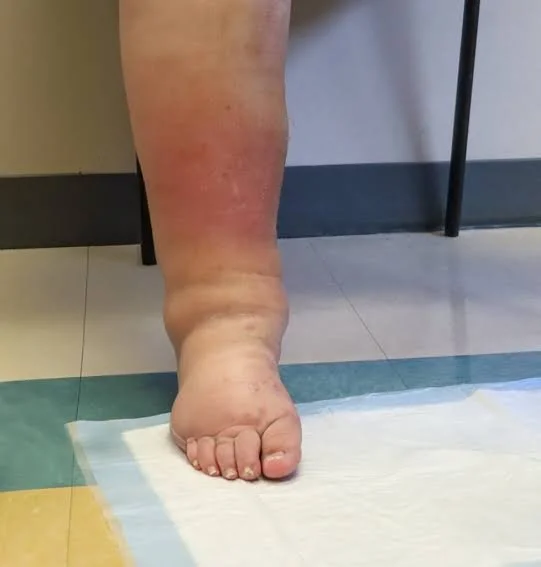
Swollen lower leg and foot with red skin irritation.
🚩 Signs Swelling Shouldn't Be Ignored
Swollen ankles are not always dangerous, but certain patterns should be checked. If swelling happens often, gets worse by evening, affects one leg more than the other, or appears with pain, heaviness, cramping, visible veins, skin discoloration, itching, or warmth, a medical evaluation is important.
You should also pay attention if the swelling no longer improves with rest or elevation. Persistent swelling may be linked to vein disease, but it can also be related to other medical concerns, so guessing at the cause is not the safest approach.
🔍 How Vein Specialists Diagnose and Treat Swelling
A vein specialist starts by reviewing your symptoms, health history, work routine, and when the swelling appears. They may examine your legs for visible veins, skin changes, tenderness, and signs of fluid buildup.
If a vein problem is suspected, ultrasound imaging may be used to check blood flow and valve function. Treatment depends on the findings and may include movement guidance, leg elevation, compression therapy, or minimally invasive procedures when damaged veins are contributing to the swelling. Inland Vein & Wound Specialists can help identify the cause and recommend care based on your actual vein health.
❓ Frequently Asked Questions
-
Your ankles may swell every evening because fluid can collect in the lower legs throughout the day. This may happen after long periods of sitting or standing, especially when circulation is not moving blood upward efficiently.
-
No. Ankle swelling is not always related to veins. It can also be linked to injury, medication, heart or kidney concerns, inflammation, or other medical conditions. A proper evaluation helps identify the cause.
-
Yes. Treatment depends on what is causing the swelling. If it is related to poor vein function, care may include lifestyle changes, compression therapy, or minimally invasive vein treatment when appropriate.
-
Swelling should be evaluated if it happens often, keeps returning in the evening, appears with pain or heaviness, affects daily comfort, or comes with visible veins, skin changes, or symptoms that continue to worsen.
