
Why Do My Legs Feel Heavy at the End of the Day?
Why Your Legs Feel Heavy at the End of the Day
Heavy legs at the end of the day can feel like normal tiredness, especially after work, errands, or long hours on your feet. But when that heavy, dragging feeling keeps coming back, your veins may be part of the reason.
Leg heaviness can happen when blood is not moving upward as efficiently as it should. Over time, this pressure can lead to swelling, aching, visible vein changes, and other vein disease symptoms that should not be ignored.
🦵 Why Heavy Legs Are Often a Sign of Vein Disease
Your leg veins work against gravity all day. They have to move blood from the lower legs back toward the heart. When the valves inside the veins weaken, blood can collect in the legs instead of flowing upward smoothly.
This can create pressure that makes the legs feel tired, heavy, achy, or swollen by evening. For some patients, heavy legs are one of the earliest signs of a vein problem, even before large visible veins appear.
🩸 What Causes Heavy Legs at the End of the Day
There are several heavy legs causes, but vein-related problems are common when symptoms get worse after sitting, standing, or walking for long periods.
Chronic Venous Insufficiency
Chronic venous insufficiency happens when the veins struggle to return blood from the legs back to the heart. This usually involves weakened or damaged valves that allow blood to move backward and collect in the lower legs.
Patients may notice heaviness, swelling, aching, cramping, itching, or discomfort that becomes more noticeable later in the day. The symptoms may improve with leg elevation, but often return when the person is active again.
Blood Pooling in the Legs
When blood pools in the lower legs, pressure inside the veins increases. This can make the legs feel full, tight, tired, or difficult to move comfortably.
Blood pooling may be more noticeable after long work shifts, travel, hot weather, or extended periods without movement. Some patients also notice ankle swelling or shoes feeling tighter by the evening.
Lifestyle and Risk Factors
Daily habits can influence how much pressure your veins handle. Long hours of sitting or standing, limited movement, excess weight, pregnancy history, aging, and inherited risk can all increase strain on the leg veins.
Jobs that keep the body in one position for most of the day may make symptoms worse. Office workers, drivers, healthcare workers, retail staff, and service professionals may all experience heavy legs when circulation is not being supported by regular movement.
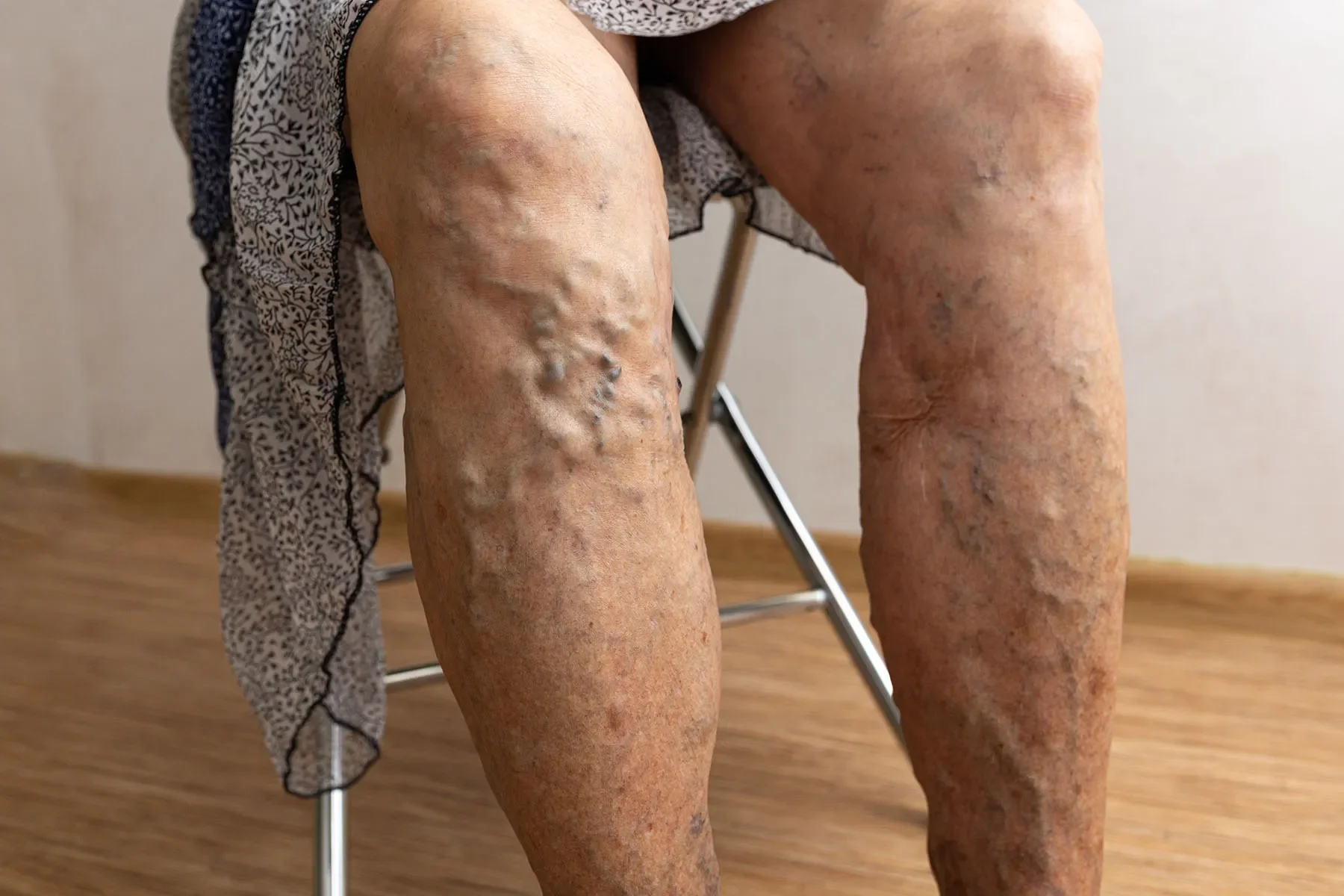
Older adult with visible leg veins and evening leg heaviness.
🚩 When Heavy Legs Require Medical Evaluation
Occasional tired legs after a busy day can happen. But recurring heaviness should be evaluated when it appears with swelling, aching, visible veins, skin discoloration, itching, cramping, or discomfort that affects daily routines.
You should also pay attention if the heaviness gets worse throughout the day, improves when the legs are elevated, or returns even after rest. These patterns may point to an underlying vein issue rather than simple fatigue.
A vein specialist can help determine whether the problem is related to circulation, surface veins, or chronic venous insufficiency. Inland Vein & Wound Specialists can evaluate symptoms, check vein function, and recommend care based on what is actually causing the discomfort.
✅ Treatment Options That Improve Leg Comfort
Treatment depends on the cause and severity of the symptoms. Some patients may benefit from simple changes such as walking more often, taking movement breaks, elevating the legs, staying hydrated, and avoiding long periods in one position.
Compression therapy may also help support blood flow and reduce swelling for certain patients. If testing shows damaged veins or poor valve function, minimally invasive treatments may be recommended to close problem veins and redirect blood through healthier vessels. The right approach starts with diagnosis. Once the cause is clear, treatment can focus on improving comfort, reducing pressure in the legs, and helping patients manage symptoms before they become more difficult to control.
❓ Frequently Asked Questions
-
Your legs may feel heavy every evening because blood and fluid can collect in the lower legs throughout the day, especially if your veins are not moving blood upward efficiently. This can lead to heaviness, swelling, aching, or tightness by the end of the day.
-
No. Heavy legs are not always caused by varicose veins. They may be related to chronic venous insufficiency, blood pooling, swelling, lifestyle factors, or other circulation concerns. A proper evaluation can help identify the cause.
-
Yes. Poor circulation can contribute to leg heaviness when blood flow in the legs is not working properly. If the veins struggle to return blood to the heart, pressure can build in the lower legs and cause discomfort.
-
You should consider seeing a vein specialist if your legs feel heavy often, especially when the symptom appears with swelling, aching, visible veins, skin changes, or discomfort that keeps returning at the end of the day.
