
Could Vein Disease Be Causing Your Night Leg Cramps?
Could Vein Disease Be Causing Your Night Leg Cramps?
Waking up with a sharp cramp in your calf or foot can feel like a simple muscle issue. But if it keeps happening while you sleep, especially with leg heaviness, swelling, aching, or visible vein changes, your circulation may need attention.
Not every nighttime cramp is vein-related, but recurring discomfort can sometimes point to a deeper problem. For some patients, night leg cramps may be one of several signs that blood is not moving through the legs as efficiently as it should.
Waking up with a sharp cramp in your calf or foot can feel like a simple muscle issue. But if it keeps happening while you sleep, especially with leg heaviness, swelling, aching, or visible vein changes, your circulation may need attention.
Not every nighttime cramp is vein-related, but recurring discomfort can sometimes point to a deeper problem. For some patients, night leg cramps may be one of several signs that blood is not moving through the legs as efficiently as it should.
🌙 What Causes Leg Cramps at Night
Leg cramps at night are sudden muscle spasms that can affect the calf, foot, or thigh during sleep. They may last a few seconds or several minutes and can leave the muscle sore afterward.
Common causes include dehydration, muscle fatigue, long periods of sitting or standing, certain medications, nerve irritation, mineral imbalance, and circulation issues. When cramps happen often, it is important to look at the full symptom pattern instead of assuming it is only a muscle problem.
🩸 The Connection Between Vein Disease and Muscle Cramps
Vein-related cramping can be hard to recognize because it may feel similar to ordinary muscle tightness. The difference is often what comes with it. If cramps appear with swelling, heaviness, aching, or discomfort that gets worse after long days, the veins may be involved.
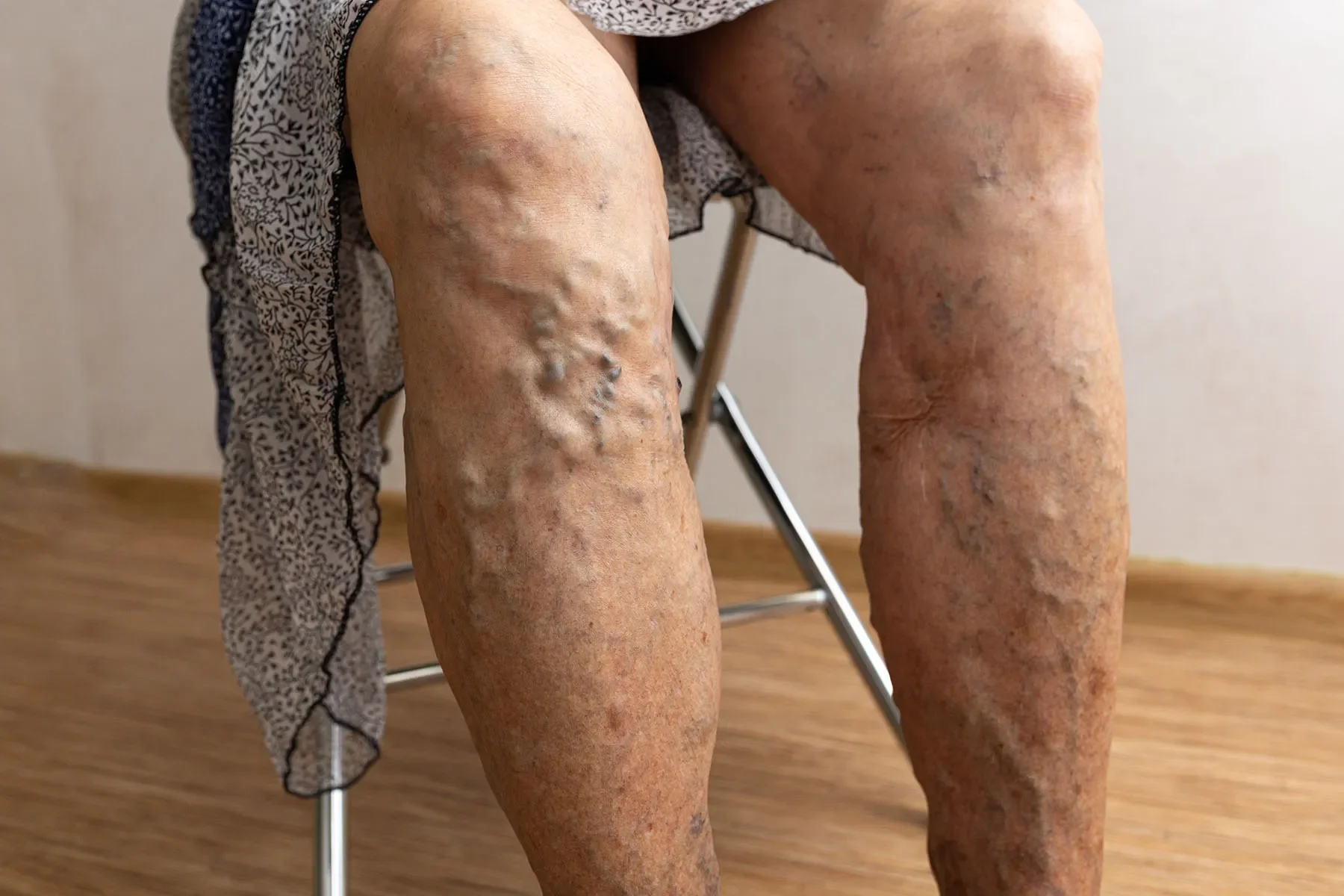
Close-up of varicose veins on an older adult’s leg.
Poor Circulation
Healthy veins help move blood from the legs back toward the heart. When blood flow slows or pressure builds in the lower legs, the muscles and surrounding tissues may feel tight, tired, or uncomfortable. This is where leg cramps poor circulation concerns become important. Cramps alone do not confirm a vein problem, but when they appear with heaviness, swelling, or visible vein changes, a vein evaluation may help identify the cause.
Chronic Venous Insufficiency
Chronic venous insufficiency happens when vein valves do not move blood upward properly. Instead of flowing smoothly back to the heart, blood can collect in the lower legs and increase pressure inside the veins. Common chronic venous insufficiency symptoms include leg heaviness, swelling, aching, throbbing, itching, restless legs, skin changes, and nighttime discomfort. If these symptoms appear together, the issue may be more than normal muscle fatigue.
Other Contributing Factors
Not every cramp is caused by vein disease. Muscle overuse, dehydration, electrolyte imbalance, back or nerve problems, medication side effects, and other health conditions can also contribute.
That is why recurring vein disease cramps should be evaluated carefully instead of guessed at. A proper exam can help separate circulation-related symptoms from muscle, nerve, or lifestyle-related causes.
🚩 When Night Cramps Need Medical Attention
Occasional cramping may improve with hydration, stretching, gentle movement, or changes in daily habits. But medical evaluation is important when cramps happen often, disrupt sleep, affect one leg more than the other, or come with swelling, heaviness, visible veins, skin discoloration, warmth, tenderness, or worsening pain.
You should also seek urgent care if leg pain appears suddenly with major swelling, redness, warmth, chest pain, or shortness of breath. These symptoms may point to a more serious medical issue and should not be ignored. For ongoing cramps that keep returning, Inland Vein & Wound Specialists can help determine whether the symptoms are linked to vein disease, circulation problems, or another cause that needs attention.
✅ Modern Treatments That Address the Underlying Cause
Treatment depends on what is causing the cramps. If symptoms are related to vein disease, the goal is to reduce pressure in the legs and improve how blood moves through the veins.
A vein specialist may begin with a symptom review, physical exam, and ultrasound imaging to check blood flow and valve function. Based on the results, care may include lifestyle guidance, compression therapy, leg elevation, movement habits, or minimally invasive treatment when damaged veins are contributing to the problem.
Modern vein treatments may include procedures that close problem veins and redirect blood through healthier vessels. When the underlying cause is addressed, patients may experience improvement in heaviness, swelling, aching, and other symptoms that can make the legs uncomfortable at night.
❓ Frequently Asked Questions
-
Visible enlarged veins may be linked with aching, heaviness, swelling, or nighttime discomfort in some patients. Cramps alone do not always mean a vein problem, but they should be evaluated if they happen with other leg symptoms.
-
Legs may cramp during sleep because of muscle fatigue, dehydration, limited movement, medications, nerve irritation, or circulation problems. If the cramps keep returning, a medical evaluation can help identify the cause.
-
Sometimes. Night cramps can have many causes, but poor circulation may be involved when cramps appear with swelling, heaviness, aching, coldness, skin changes, or visible vein changes.
-
Vein-related cramps are treated by addressing the circulation problem behind them. Care may include compression therapy, movement guidance, ultrasound evaluation, or minimally invasive procedures if damaged veins are causing pressure and symptoms.
