
Radiofrequency Ablation
in Rancho Cucamonga
Minimally invasive treatments designed to help you move comfortably, heal faster, and feel confident again.
Radiofrequency Ablation (RFA)
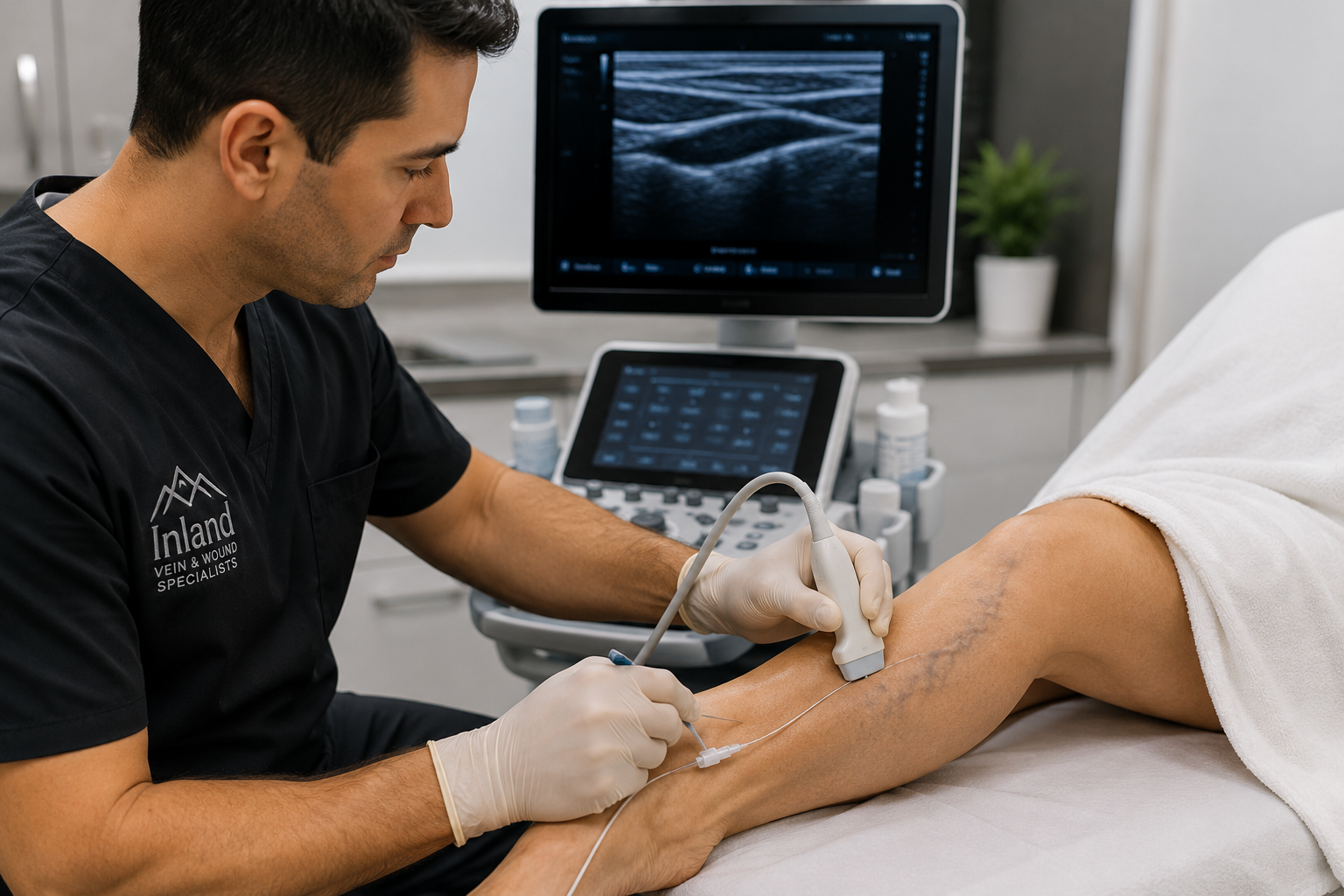
Radiofrequency Ablation (RFA) is an advanced, minimally invasive procedure used to treat venous insufficiency and symptomatic varicose veins. At Inland Vein and Wound Specialisits in Rancho Cucamonga, CA, RFA is performed under ultrasound guidance to precisely target the diseased vein.
During the procedure, a thin catheter is inserted into the affected vein, and controlled radiofrequency energy is delivered to gently heat and close the vein. Once sealed, blood is naturally redirected to healthy veins, improving circulation and relieving symptoms such as leg heaviness, swelling, aching, and visible varicosities.
RFA is performed in our outpatient clinic, typically takes less than an hour, and allows patients to return to normal activity quickly. Most insurance plans cover RFA when medical criteria are met.
Why choose us?
Healthy legs. Better days. Greater confidence.
Whether you're dealing with painful varicose veins or a chronic wound that won't heal, our specialists help you get back to living comfortably and confidently.
Advanced Treatments
Expert solutions for vein and wound conditions
Fast Recovery
Minimally invasive care with little downtime

Personalized Care
Treatment plans tailored to your needs
Modern Technology
Advanced tools for precise diagnosis

Insurance Accepted
We accept many major insurance plans
Vein Treatment Process

01. Book Appointment
Schedule your convenient appointment online or by phone.

02. Consultation
Meet with our vein specialist to discuss your symptoms, medical history, and treatment goals.
03. Ultrasound Evaluation
A non-invasive ultrasound is performed to evaluate your veins and identify underlying issues.
04. Personalized Treatment Plan
We create a customized treatment plan tailored to your condition and lifestyle.
05. Treatment
Your procedure is performed in-office using minimally invasive techniques for optimal comfort.
06. Recovery & Follow-Up
Return to your normal activities quickly. We'll monitor your progress and ensure the best long-term results.
FAQs about Radiofrequency Ablation
Wondering if your leg pain, swelling, or visible veins could be signs of vein disease? Explore answers to the questions patients ask most often before scheduling a consultation.
-
Radiofrequency ablation (RFA) is a minimally invasive procedure that uses controlled heat generated by radiofrequency energy to interrupt pain signals from specific nerves. A physician inserts a thin needle near the targeted nerve using imaging guidance, then applies heat to reduce the nerve's ability to transmit pain while preserving surrounding tissue.
-
Radiofrequency ablation is commonly used to treat chronic pain caused by arthritis of the spine, facet joint syndrome, sacroiliac joint dysfunction, neck pain, lower back pain, and certain types of nerve-related pain. It may also help patients whose pain has not improved with medications, physical therapy, or injections.
-
Patients with chronic pain lasting several months who have responded well to diagnostic nerve blocks are often good candidates for radiofrequency ablation. Your physician will evaluate your medical history, imaging studies, and previous treatments to determine whether RFA is an appropriate option.
-
Pain relief varies from person to person but typically lasts between 6 and 18 months. As the treated nerve gradually regenerates, symptoms may return. If the procedure was successful initially, radiofrequency ablation can often be safely repeated.
-
Most patients experience only mild discomfort during radiofrequency ablation. Local anesthetic is used to numb the treatment area, and some patients receive light sedation to improve comfort. Temporary soreness after the procedure is common and usually resolves within a few days.
-
The procedure usually takes 30 to 60 minutes and is performed on an outpatient basis. Most patients go home the same day. Mild soreness or swelling at the treatment site is normal, while pain relief may develop gradually over several days or weeks as the treated nerves stop transmitting pain signals.
-
Radiofrequency ablation is considered a safe procedure when performed by an experienced specialist. Potential side effects include temporary soreness, bruising, numbness, or swelling at the treatment site. Serious complications, such as infection or nerve injury, are rare.
-
Recovery is typically quick. Most patients return to light daily activities within 24 to 72 hours, although strenuous exercise should be avoided for several days. Your provider will give personalized instructions based on your treatment plan.
-
Many private insurance plans and Medicare cover radiofrequency ablation when it is considered medically necessary and conservative treatments have failed. Coverage requirements vary by provider, so it's important to verify your benefits before scheduling the procedure.
-
Yes. Because nerves can regenerate over time, pain may eventually return. If you experienced significant relief from the initial treatment, your physician may recommend repeating radiofrequency ablation to restore long-lasting pain relief.

Questions about your insurance coverage?
We know insurance coverage for vein treatments can be confusing. Our team is here to help you understand your benefits and verify your coverage before your treatment.
Free Vein Screening Consultation
Concerned about varicose veins, leg discomfort, or poor circulation? Fill out the form below and our team will contact you to schedule your free screening.
FREE First Vein Screening
|
FREE First Vein Screening |
Patient Information
Working Hours
To learn more about our services or arrange a consultation, please contact our office at +1 (909) 308-5989.
Business Hours:
Monday to Friday: 9:00 AM – 5:00 PM
Saturday and Sunday: Closed
Appointment Changes
If you need to cancel or reschedule your visit, we kindly request that you notify us at least 24 hours in advance. This allows us to offer the appointment slot to another patient who may be waiting for care.
Insurance Information
Many insurance providers cover treatment for symptomatic vein conditions. Our clinic works with a wide range of insurance plans. Please reach out to our team for specific coverage details.
Accepted Payment Methods
We strive to make payments simple and convenient. We currently accept cash, personal checks, Visa, Mastercard, American Express, and Discover cards.




How to find us
Our clinic is conveniently located at:
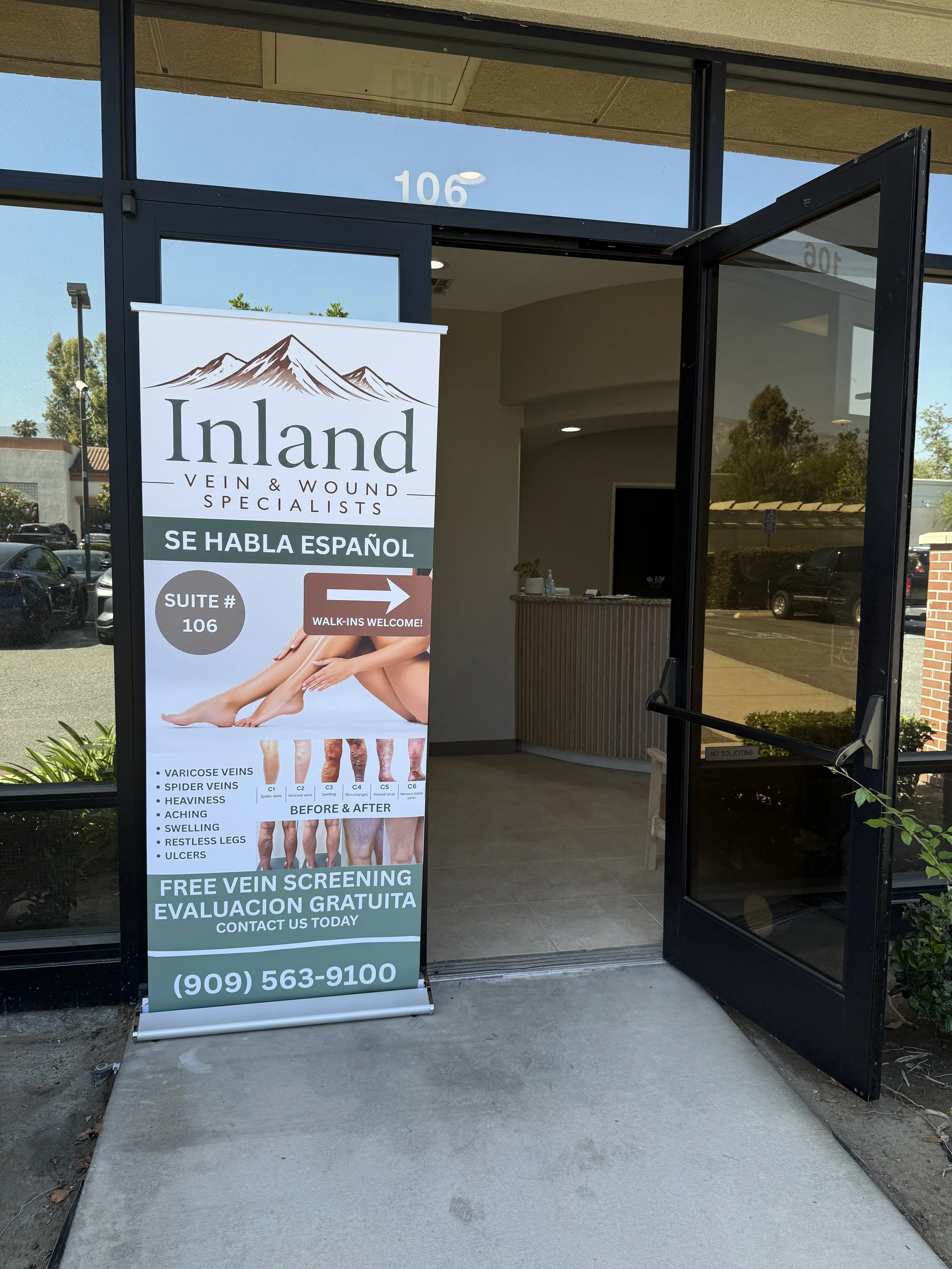
10801 Foothill Blvd, Suite 106 Rancho Cucamonga, CA 91730
For easy navigation, click the button below to get directions from your current location.