
Visible Veins but No Pain: Should You Be Concerned?
Visible Veins Without Pain: Should You Be Concerned?
Seeing new veins on your legs can be confusing when nothing hurts. You may wonder if it is only cosmetic or if it could be the first sign of a circulation problem. The phrase visible veins no pain may sound harmless, but pain is not the only sign that veins need attention. Some vein problems start quietly, with small visible changes before heaviness, swelling, aching, or skin irritation appear later.
👀 Are Visible Veins Always Harmless?
Visible veins are not always dangerous, but they should not always be dismissed either. Some surface veins are mostly cosmetic, while others may point to pressure building inside the leg veins. The concern depends on the type of vein, how quickly it appeared, whether it is spreading, and whether other symptoms are present. If the veins become more noticeable over time or appear with swelling, heaviness, itching, or skin color changes, an evaluation can help determine whether something deeper is involved.
🩸 What Visible Veins May Reveal About Vein Health
Visible veins can show up for different reasons. Some are small surface vessels, while others may be early signs of vein pressure or valve problems. The appearance alone does not always explain what is happening beneath the skin.
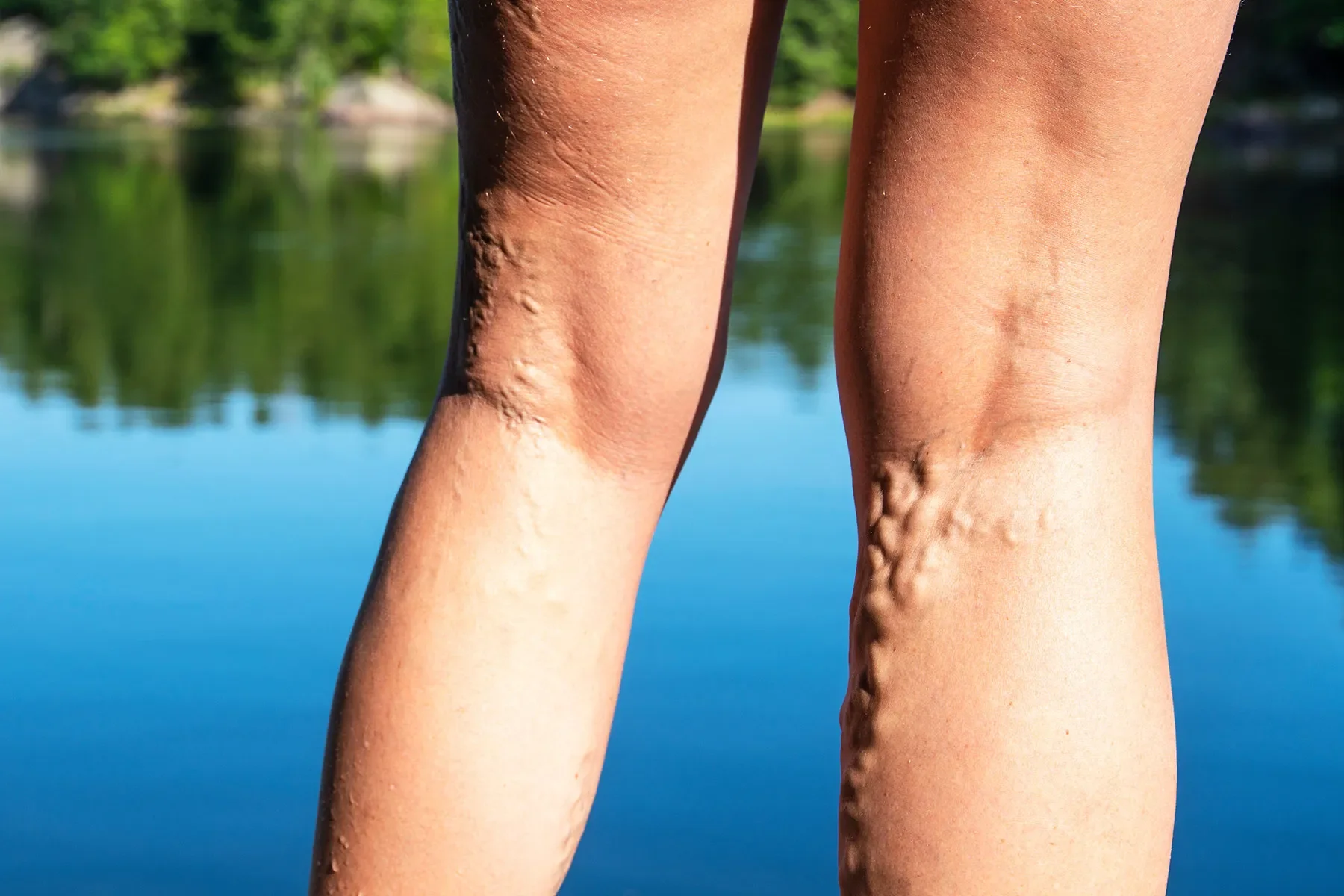
Close-up of lower legs with visible varicose veins.
Spider Veins
Spider veins are small red, blue, or purple lines that often appear near the surface of the skin. They may look like thin branches, webs, or clusters, especially on the legs. For many people, they are mainly a cosmetic concern. However, spider veins symptoms can sometimes include mild itching, burning, aching, or discomfort. If they spread quickly or appear with other leg symptoms, they may need a closer look.
Early Varicose Veins
Early varicose veins may start as slightly raised, twisted, or enlarged veins that are not painful yet. They may become more noticeable after standing, during warm weather, or at the end of the day. Even without pain, these veins may suggest that blood is not moving as efficiently as it should. Early evaluation can help identify whether the issue is only surface-level or connected to weakened vein valves.
Progressive Vein Disease
Vein disease can develop slowly. A patient may first notice visible veins, then later experience swelling, heaviness, aching, throbbing, itching, or skin changes. This is why waiting for pain is not always the best approach. If visible veins continue to change or new symptoms appear, the condition may be progressing and should be checked by a specialist.
🚩 Signs That It's Time for a Vein Evaluation
You should consider a vein evaluation if visible veins are spreading, becoming raised, appearing with swelling, or causing heaviness, aching, itching, burning, cramping, or restless legs. Skin discoloration, dryness, irritation, or changes around the ankles should also be taken seriously. A vein specialist consultation may also be helpful if you have a family pattern of vein problems, a pregnancy history, a job that requires long sitting or standing, or visible veins that keep getting worse. An exam can help determine whether the concern is cosmetic, medical, or both.
✅ Modern Treatments for Early Vein Disease
Treatment depends on what is causing the visible veins. Some patients may only need monitoring, lifestyle guidance, movement habits, leg elevation, or compression therapy. Others may need ultrasound imaging to check blood flow and valve function. When damaged veins are contributing to the problem, minimally invasive treatments may be recommended. Options can include sclerotherapy for smaller surface veins or vein ablation for larger problem veins. Treating early can help reduce pressure, improve comfort, and prevent symptoms from becoming harder to manage.
❓ Frequently Asked Questions
-
Visible veins without pain are not always serious, but they should be watched. If they spread, become raised, or appear with swelling, heaviness, itching, or skin changes, a vein evaluation is recommended.
-
Yes. Some vein problems begin with visible changes before discomfort appears. Pain is not always the first warning sign, which is why changes in appearance should not be ignored if they continue to progress.
-
They can get worse over time, especially if they are linked to poor vein function or increased pressure in the legs. Early evaluation can help identify the cause before symptoms become more noticeable.
-
Item description
