
Why Do My Legs Ache After Sitting All Day?
Why Your Legs Ache After Sitting All Day
If your legs ache after sitting for hours, it may not be simple tiredness. That dull, heavy, restless feeling can be your body’s way of saying your lower-leg circulation needs more support. Sitting all day leg pain can happen when blood flow slows, pressure builds in the legs, and the calf muscles are not moving enough to help push blood back toward the heart.
🪑 Why Sitting for Long Periods Affects Your Legs
Your legs are designed to move throughout the day. When you sit for long stretches, especially with your knees bent and feet still, blood has a harder time moving upward from the lower legs.
This can lead to aching, heaviness, ankle swelling, tightness, or a tired feeling by the end of the day. For some people, symptoms improve after walking or elevating the legs, but return again after another long period of sitting.
🩸 How Prolonged Sitting Contributes to Vein Disease
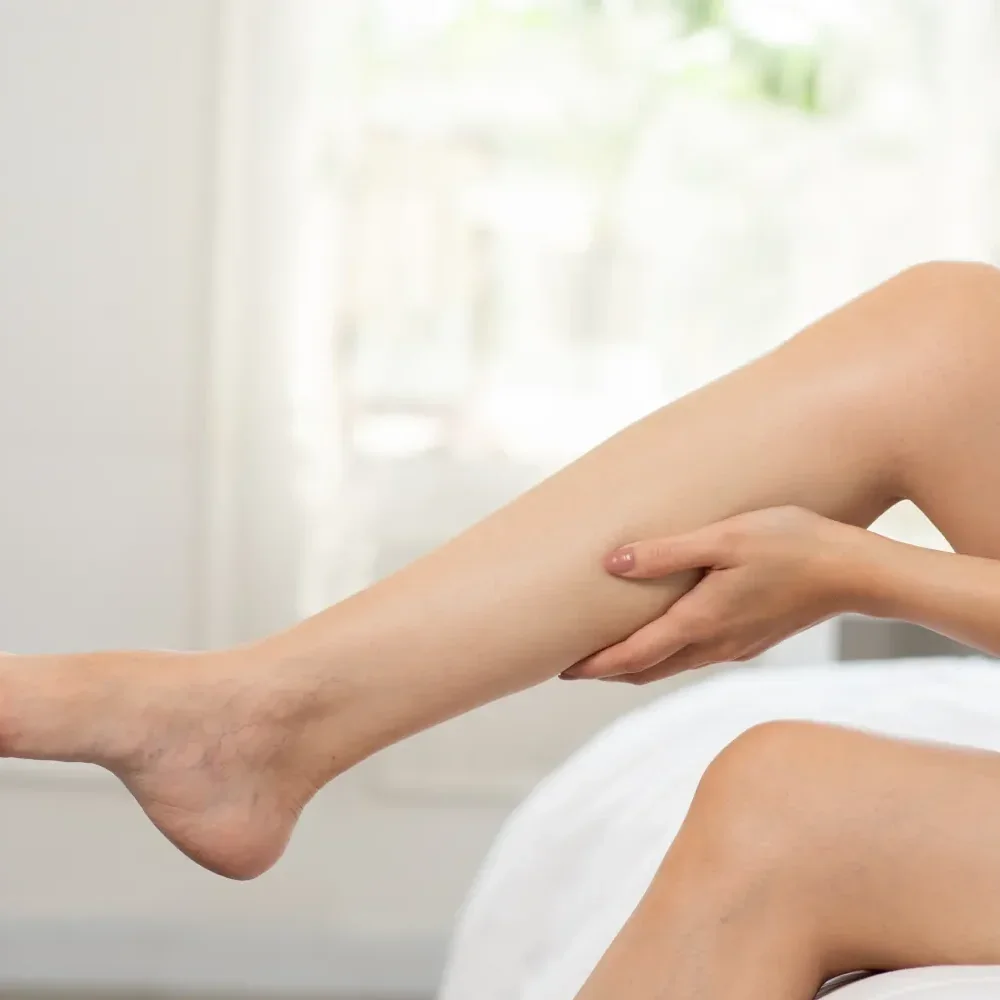
Person holding their lower leg while sitting on a bed.
Sitting for hours does not always cause vein disease on its own, but it can make circulation problems more noticeable. When the legs stay still, the veins and calf muscles are not getting the same support they get during walking.
Reduced Blood Circulation
The calf muscles help move blood upward every time you walk, stretch, or flex your ankles. When you sit for long periods, that natural pump is less active, which may allow blood and fluid to collect in the lower legs. This is where poor circulation sitting concerns become important. If aching appears often after desk work, driving, travel, or remote work, the pattern should not be ignored.
Increased Venous Pressure
When blood flow slows, pressure inside the lower-leg veins may increase. This can make the legs feel heavy, sore, swollen, or uncomfortable, especially later in the day. People who already have weakened vein valves may notice symptoms sooner. The longer the legs stay still, the more pressure can build around the ankles, calves, and lower legs.
Early Symptoms of Venous Insufficiency
Venous insufficiency happens when the valves inside the veins do not move blood upward properly. Early signs can be subtle, which is why many people mistake them for normal fatigue. Common vein disease symptoms may include aching, heaviness, swelling, throbbing, itching, visible veins, skin changes, or discomfort that gets worse after sitting or standing for long periods.
✅ Healthy Habits That Reduce Leg Discomfort
Small movement habits can make a noticeable difference. Try standing up every 30 to 60 minutes, taking short walks, stretching your calves, doing ankle circles, or gently raising your heels while seated. It may also help to avoid crossing your legs for long periods, drink enough water, wear comfortable shoes, and elevate your legs after work. Compression socks may support circulation for some people, especially during long workdays or travel, but the right compression level should be recommended based on your symptoms.
🚩 When Aching Legs Should Be Evaluated by a Specialist
Occasional discomfort after a long day can happen. But if aching keeps coming back, worsens by evening, or appears with swelling, heaviness, visible veins, skin discoloration, itching, cramping, or restless legs, a vein evaluation may be needed. A specialist can review your symptoms, examine your legs, and use ultrasound imaging when needed to check blood flow and valve function. The right diagnosis helps determine whether symptoms are from inactivity alone or an underlying circulation problem that needs treatment.
❓ Frequently Asked Questions
-
Your legs may ache after sitting because blood flow slows when the calf muscles are not moving. This can lead to pressure, tightness, heaviness, or swelling in the lower legs.
-
Sitting too long may contribute to vein problems by reducing movement and increasing pressure in the legs. It is especially concerning for people who already have weakened vein valves or recurring symptoms.
-
Yes. Walking helps activate the calf muscles, which support blood flow from the legs back toward the heart. Even short walking breaks during the day can help reduce stiffness and discomfort.
-
You should see a vein specialist if leg aching keeps returning after sitting, disrupts daily comfort, or appears with swelling, heaviness, visible veins, skin changes, or symptoms that continue to worsen.
