
Why Are New Varicose Veins Appearing So Quickly?
Why Are New Varicose Veins Appearing So Quickly?
You may look at your legs one week and notice a few visible veins, then suddenly feel like there are several more. In most cases, these changes do not happen overnight. The underlying vein problem may have been developing for some time before the veins became noticeable on the surface. That is why a sudden change in appearance does not always mean the condition suddenly became severe. It may simply be the point when an existing circulation problem became easier to see.
🦵 Why Are New Varicose Veins Appearing?
When the valves inside the leg veins do not close properly, some blood can flow backward and collect in the lower legs. This increases pressure inside the affected veins. Over time, the veins may stretch, enlarge, and become more visible beneath the skin. So while new varicose veins appearing may seem sudden, the process behind them is often gradual.
What Happens Beneath the Skin?
Healthy veins move blood upward toward the heart with help from one-way valves and the calf muscles. When those valves become weak, blood can move in the wrong direction. This can create pressure that gradually affects nearby veins. Smaller surface veins may become more noticeable as the circulation problem develops, making it seem as though several new veins appeared at once.
📈 Can Varicose Veins Get Worse Over Time?
Yes. Varicose veins getting worse can be a sign that the underlying circulation problem is continuing. Not everyone experiences the same rate of change. Some people may notice little change for years, while others develop more visible veins and symptoms over a shorter period. The appearance of new veins becomes more important when it occurs alongside swelling, heaviness, aching, itching, or skin changes.
Factors That May Contribute to Progression
Several factors can place additional pressure on the veins or increase the likelihood of developing symptoms.
Age-related weakening of vein valves
Pregnancy and hormonal changes
Long periods of sitting or standing
Limited physical activity
Excess weight
Previous blood clots
An inherited tendency toward vein problems
These factors do not mean that progression is inevitable. They simply help explain why some people may experience more noticeable changes over time.
🔍 What Does the Progression of Vein Disease Look Like?
Earlier changes
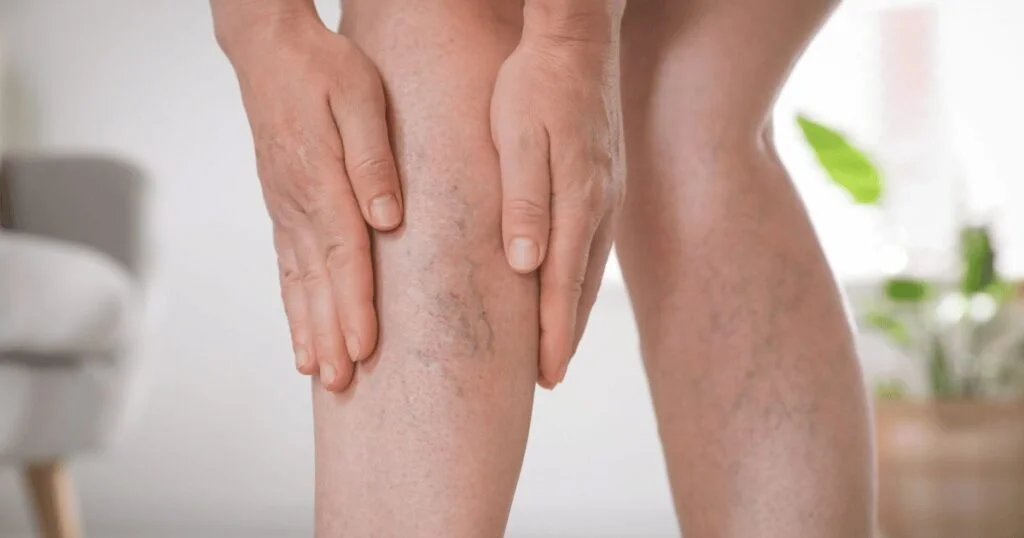
Person touching their lower leg where varicose veins are visible.
Small visible veins
Occasional leg fatigue
Mild or occasional swelling
Few or no skin changes
Symptoms mainly after long days
More advanced changes
Larger, bulging veins
Frequent heaviness or aching
Persistent lower-leg swelling
Discoloration or other skin changes
Symptoms that interfere with daily activities
🩸 Why Can New Veins Become Noticeable So Quickly?
Sometimes the veins themselves have not suddenly developed. Instead, changes in blood flow, temperature, activity, weight, pregnancy, or other factors can make veins that were already present much easier to see. Heat can temporarily make surface veins more prominent. Increased pressure within the veins can also cause existing vessels to become larger over time. This is why a person may feel that their legs changed suddenly even though the underlying process had been developing gradually.
⚠️ When Should New Veins Be Evaluated?
New visible veins are not automatically a cause for concern. Many are harmless surface changes. However, an evaluation is worthwhile when new veins appear alongside symptoms such as swelling, aching, heaviness, itching, skin discoloration, or a noticeable increase in the size or number of enlarged veins. Pay particular attention when changes continue despite healthy habits or begin interfering with work, exercise, sleep, or everyday activities. The goal of an evaluation is not simply to determine whether the veins look unusual. It is to find out whether an underlying circulation problem is contributing.
🩺 How Venous Insufficiency Can Lead to Visible Changes
Venous insufficiency occurs when blood has difficulty moving upward through the leg veins. When valves are not functioning properly, blood can flow backward and create pressure within the vessels. Over time, this pressure may cause veins to stretch and become more visible. Because the problem can develop before obvious surface changes appear, treating only the visible veins may not address the source. A specialist can use diagnostic testing to determine whether reflux, or backward blood flow, is occurring and which veins are involved.
🏥 How Inland Vein & Wound Specialists Can Help
Inland Vein & Wound Specialists looks beyond the appearance of visible veins to identify what is causing them. During an evaluation, the team reviews symptoms and examines the legs. Ultrasound imaging can be used to assess blood flow and identify reflux within the veins. Once the source of the problem is understood, the appropriate vein treatment can be discussed. Depending on the findings, this may include conservative care or minimally invasive procedures designed to close problem veins and redirect blood through healthier vessels.
If you are noticing new veins appearing more quickly than expected, do not assume you simply have to live with them. Contact Inland Vein & Wound Specialists for an evaluation and find out whether an underlying circulation problem needs attention.
❓ Frequently Asked Questions
-
New visible veins may develop as weakened valves allow blood to pool and increase pressure within the leg veins. The underlying changes usually develop gradually, even when the veins suddenly become more noticeable.
-
It can appear to progress quickly, but vein disease often develops over a longer period before visible changes become obvious. The rate varies depending on factors such as age, pregnancy, activity level, weight, and vein function.
-
Increased pressure within the veins can make them larger and more visible. Heat, hormonal changes, prolonged standing, pregnancy, and other factors may also make existing veins easier to see.
-
Consider an evaluation when new veins appear alongside swelling, aching, heaviness, itching, skin changes, or other recurring symptoms. A specialist can determine whether the visible changes are connected to an underlying circulation problem.
