
Can Vein Disease Progress Without Severe Pain?
Can Vein Disease Progress Without Causing Severe Pain?
Not every vein problem announces itself with intense pain. Sometimes the first signs are much easier to brush off: your legs feel tired by evening, your ankles swell after a long day, or a few visible veins seem to be appearing more often. Because these changes may feel manageable, it is easy to wait. But mild symptoms can still be worth investigating, especially when they keep returning.
🩺 Can Vein Disease Progress Without Pain?
Yes. Vein disease without pain is possible, particularly in its earlier stages. A person may have changes in how blood moves through the leg veins without experiencing significant discomfort. The body can adapt to these changes for some time, while symptoms remain mild or occasional. Pain is therefore not a requirement for a vein problem to exist.
Why Pain Is Not Always the First Sign
When vein valves become weak, blood can begin moving backward and collecting in the lower legs. This can increase pressure inside the veins without immediately causing severe pain.
Instead, a person may first notice:
Legs that feel heavy or tired
Mild swelling around the ankles
Visible or enlarged veins
Itching or irritation
Restlessness in the legs
Symptoms that become worse after standing or sitting
These changes may seem minor individually, but a pattern that keeps returning deserves attention.
🔎 What Are the Early Symptoms of Vein Disease?
The early symptoms of vein disease can be subtle. Some people notice that their legs feel different at the end of the day. Others see small visible veins or experience swelling that disappears after resting. The important factor is not necessarily how severe one symptom feels. It is whether the symptoms are becoming more frequent or are starting to affect your normal routine.
Early vs. More Advanced Changes
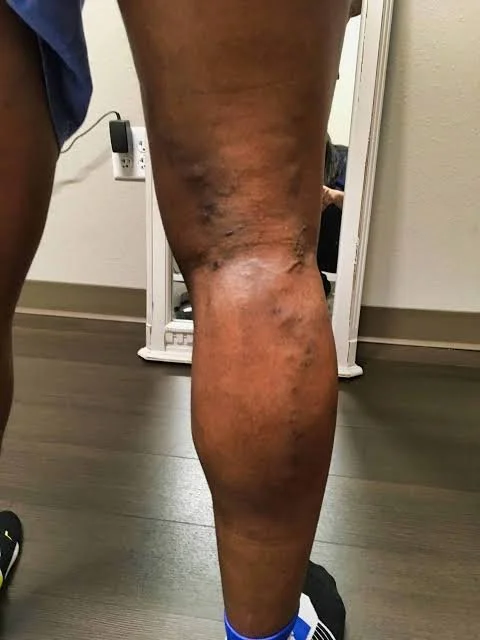
Back of a leg displaying visible, bulging varicose veins behind the knee
Earlier signs
Occasional leg fatigue
Mild ankle swelling
Small visible veins
Occasional itching
Symptoms after long periods of standing
More advanced signs
Persistent heaviness or discomfort
Frequent or significant swelling
Larger, bulging veins
Ongoing skin irritation or discoloration
Symptoms that interfere with daily activities
🦵 How Can Symptoms Develop Without Severe Pain?
The veins in your legs have one-way valves that help move blood upward toward the heart. When those valves become weakened, blood may flow backward and collect in the lower legs. Over time, this can increase pressure inside the veins. At first, the change may produce little more than fatigue, mild swelling, or a feeling of heaviness. As the problem continues, other symptoms may develop. This is one reason chronic venous insufficiency symptoms should not be judged by pain alone.
⏳ Why Mild Symptoms Should Not Be Ignored
It is understandable to put off an appointment when symptoms are not painful enough to disrupt your day. But waiting for severe pain before seeking help may mean overlooking earlier signs of a circulation problem.
Pay attention if you notice that your symptoms:
Keep returning after long days
Are becoming more noticeable over time
Improve with elevation but return later
Are accompanied by swelling or visible vein changes
Begin affecting your work, exercise, sleep, or daily routine
Persistent symptoms do not necessarily mean you need treatment. They simply give you a reason to find out what is causing them.
🩸 What Happens When Circulation Is Affected?
Healthy circulation depends on blood moving efficiently through the veins and back toward the heart. When vein valves do not function properly, blood can pool in the lower legs. This can contribute to swelling, heaviness, visible veins, and changes in the skin. Over time, untreated problems may become more difficult to manage. The earlier the underlying issue is identified, the more opportunity there is to manage symptoms and protect the health of the surrounding tissue.
🩺 Is Pain Required for Treatment?
No. Treatment decisions are not based on pain alone. A specialist considers your symptoms, physical findings, medical history, and how well blood is moving through your veins. Some patients may need only monitoring or lifestyle changes, while others may benefit from compression therapy or minimally invasive treatment. The purpose of a vein evaluation is to understand what is happening before deciding whether treatment is appropriate.
🏥 How Inland Vein & Wound Specialists Helps Identify Vein Problems
Inland Vein & Wound Specialists takes early symptoms seriously, even when they are not severe. An evaluation may include a review of your symptoms, physical examination, and ultrasound imaging when appropriate. This allows the specialist to assess blood flow and determine whether weakened valves or another circulation problem may be contributing. If a problem is identified, treatment recommendations are based on the findings and your individual needs. Depending on the condition, care may include lifestyle guidance, compression therapy, or minimally invasive procedures. You do not need to wait until your legs become severely painful before getting answers. If mild symptoms keep returning, contact Inland Vein & Wound Specialists to schedule an evaluation and find out what may be happening beneath the surface.
❓ Frequently Asked Questions
-
Yes. Some people experience little or no significant pain in the earlier stages. Heaviness, swelling, fatigue, itching, and visible veins may appear before more noticeable discomfort develops.
-
Common early signs include tired or heavy legs, mild ankle swelling, visible veins, itching, and symptoms that become worse after prolonged sitting or standing. Recurring changes are worth discussing with a specialist.
-
No. Treatment is based on the underlying vein problem, symptoms, circulation, and overall findings rather than pain alone. Some patients may benefit from treatment even when their discomfort is mild.
-
Consider an evaluation when symptoms keep returning, become more noticeable, or begin affecting your daily routine. Early assessment can help identify a problem before it becomes more advanced.
