
Can Varicose Veins Be the Cause of Foot Pain?
Can Varicose Veins Be the Cause of Foot Pain?
Foot pain is easy to blame on shoes, joints, or an old injury. But what if your feet also feel swollen, heavy, or uncomfortable after you have been standing all day? Problems higher up in the legs can sometimes contribute to discomfort that reaches the feet. When blood does not move upward efficiently, pressure and fluid can build in the lower legs and around the ankles. That does not mean every aching foot is caused by a vein problem. The pattern of your symptoms matters.
🦶 Can Varicose Veins Cause Foot Pain?
They can contribute to foot discomfort, particularly when the affected veins are associated with poor circulation or ongoing swelling. When valves inside the leg veins do not work properly, blood can collect in the lower extremities. The increased pressure may cause fluid to move into surrounding tissues, leading to swelling around the ankles and feet. This can create a feeling of tightness, aching, heaviness, or general discomfort rather than the sharp pain commonly associated with an injury.
🩸 How Foot Pain From Vein Disease Can Develop
Vein-related discomfort often has a different pattern from pain caused by muscles, joints, or bones.
Increased Pressure in the Legs
Healthy veins help move blood upward toward the heart. When damaged valves allow blood to flow backward, pressure can build inside the affected veins. Over time, that pressure can contribute to swelling and discomfort in the lower part of the leg.
Swelling Around the Feet
Swelling is one of the more noticeable ways a circulation problem can affect the feet. You may notice that your shoes feel tighter toward the end of the day or that your ankles look puffier after hours of standing. The swelling may improve after resting or elevating your legs.
The Connection to Chronic Venous Insufficiency
Chronic venous insufficiency occurs when the veins have difficulty returning blood from the legs to the heart. As pressure builds, symptoms can extend downward toward the ankles and feet. Patients may experience heaviness, aching, itching, swelling, or a tired feeling that becomes more noticeable later in the day.
🔎 How Can You Tell What Is Causing the Discomfort?
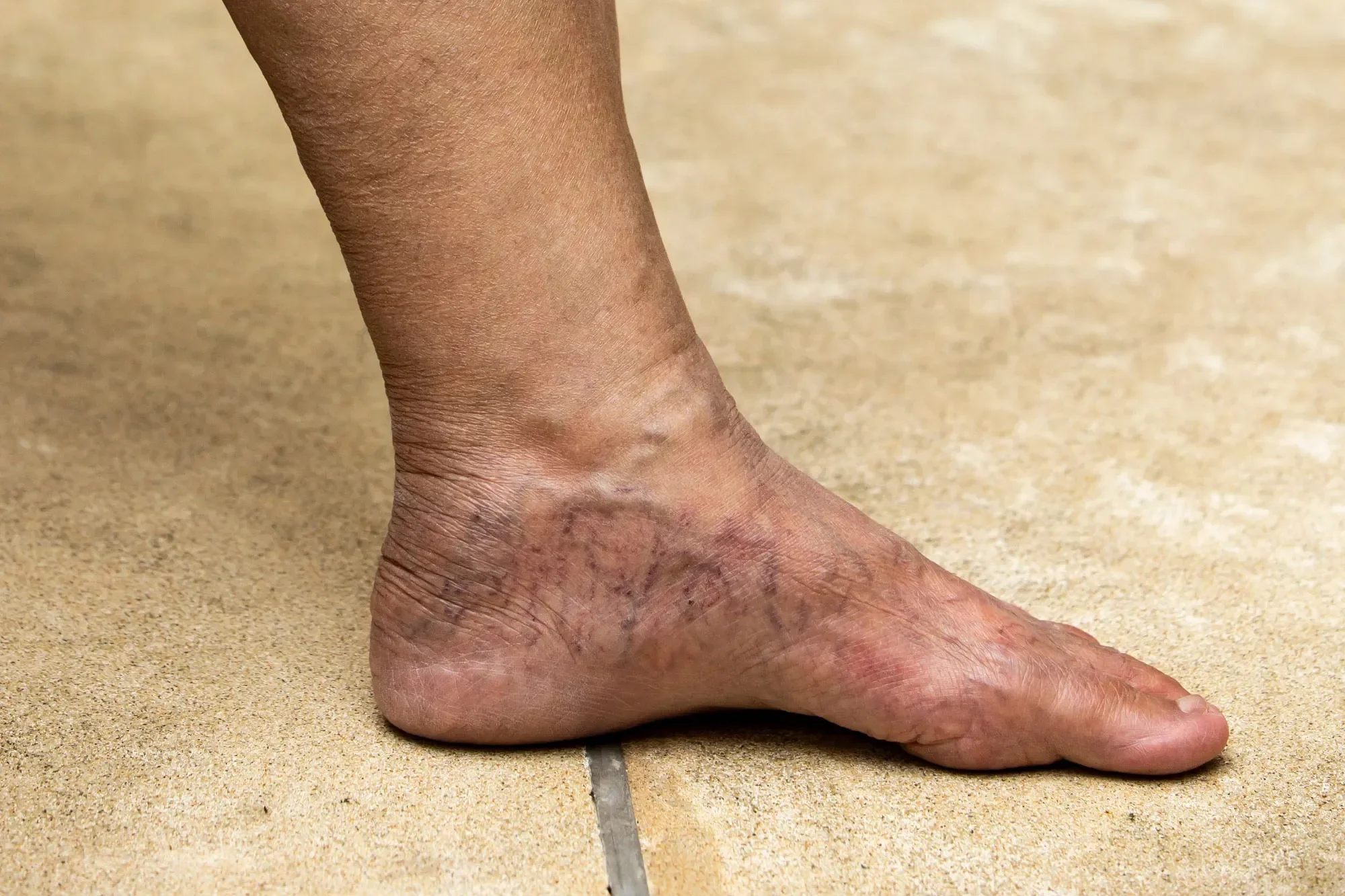
Varicose veins visible on a person's feet and lower legs.
Vein-related discomfort may:
Come with swelling or a feeling of heaviness
Worsen after prolonged standing
Affect both legs or feet
Improve when the legs are elevated
Occur alongside visible enlarged veins or skin changes
Other common causes of foot discomfort may:
Occur after an injury or overuse
Worsen with walking or specific movements
Be limited to one specific area
Improve with rest or changing activity
Involve joint, tendon, bone, or nerve-related symptoms
👣 Signs Your Feet May Be Affected by a Vein Problem
If you have discomfort in your feet, look for other symptoms affecting your legs.
Symptoms that may point toward a circulation-related problem include:
Swelling around the feet or ankles
Legs that feel heavy or tired by the end of the day
Aching or throbbing that becomes worse after standing
Visible enlarged veins
Itching or changes in the skin around the lower legs
Symptoms that improve when the legs are elevated
Having one or more of these symptoms does not automatically mean vein disease is the cause. They simply provide useful information for a specialist evaluating the problem.
🧍 Why Standing Can Make Foot Discomfort Worse
Long periods on your feet can increase pressure in the veins of the lower legs. When the calf muscles are not moving enough to help push blood upward, blood can collect in the lower extremities. This can be particularly noticeable for people who work in retail, healthcare, hospitality, construction, or other jobs that require hours of standing. Sitting for long periods can also reduce regular leg movement and contribute to swelling.
🩺 When Foot Pain May Need a Vein Evaluation
Persistent discomfort deserves more attention when it keeps returning without an obvious explanation. You may want to speak with a specialist if your foot discomfort occurs alongside recurring swelling, visible veins, leg heaviness, skin changes, or symptoms that consistently become worse after standing. A specialist can look at the complete picture rather than assuming that every symptom comes from the feet themselves.
🏥 How Inland Vein & Wound Specialists Determines the Cause
Inland Vein & Wound Specialists does not assume that foot discomfort is caused by the veins simply because visible veins are present. An evaluation begins with your symptoms and medical history, followed by a physical examination when appropriate. If a circulation problem is suspected, ultrasound imaging can help assess blood flow and determine whether the veins and their valves are functioning properly. This helps distinguish a vein-related problem from other potential causes of discomfort.
If the evaluation shows that a vein condition is contributing to your symptoms, your specialist can discuss appropriate vein treatment based on the underlying problem. Treatment recommendations are personalized rather than based on symptoms alone. If persistent foot discomfort is accompanied by swelling, heaviness, or other changes in your legs, schedule an evaluation with Inland Vein & Wound Specialists to find out whether your veins may be part of the problem.
❓ Frequently Asked Questions
-
When blood does not move efficiently upward through the leg veins, pressure can build and fluid may collect around the ankles and feet. This can cause puffiness, heaviness, tightness, and aching.
-
They can contribute to discomfort in the feet, particularly when they are associated with swelling and increased pressure in the lower legs. However, foot pain has many possible causes, so a professional evaluation is needed to determine what is responsible.
-
No. Foot pain can result from injuries, arthritis, nerve problems, footwear, overuse, and many other conditions. Symptoms alone cannot determine whether poor circulation is responsible.
-
Consider an evaluation if the pain persists, keeps coming back, or appears alongside ankle puffiness, visible veins, heaviness, skin changes, or other leg symptoms. A specialist can determine whether poor vein function or another condition may be behind the discomfort.
