
Can Healthy, Active People Develop Vein Disease?
Can Healthy, Active People Still Develop Vein Disease?
You exercise regularly, eat well, stay active, and still notice bulging veins, leg heaviness, or swelling. It can be confusing to see these changes when you feel like you are doing everything right. But good habits do not make you immune to vein problems. Exercise supports circulation and can help keep your legs moving, but some factors affecting vein health are outside your control. Understanding those factors can help you recognize symptoms early instead of assuming they cannot happen to you.
🏃 Can Active People Get Vein Disease?
Yes. Can active people get vein disease even when they exercise regularly? Absolutely. Physical activity encourages the calf muscles to help move blood upward through the legs. It is an important part of maintaining healthy circulation, but it cannot change inherited traits, aging, pregnancy-related changes, or the effects of certain occupations.
Some active adults also spend long periods sitting at work, traveling, or standing during the day. Exercise later in the day may not completely offset hours spent in one position. Being active is beneficial, but it is only one part of the bigger picture.
🧬 Why Can Vein Disease Affect Healthy Adults?
A healthy lifestyle can reduce some risks, but it cannot remove every factor that influences how your veins function.
Genetics
Your genes can influence the strength of your vein walls and valves. If vein problems tend to run in your family, you may have a higher likelihood of developing them even if you maintain an active lifestyle. This does not mean symptoms are inevitable. It simply means inherited risk is one factor worth knowing about.
Age
Vein valves can become weaker over time. As you get older, the veins may have more difficulty moving blood upward against gravity. Being fit does not stop the natural changes that occur with aging.
Pregnancy
Pregnancy can place additional pressure on the veins in the lower body. Increased blood volume, hormonal changes, and pressure from the growing uterus can all affect circulation. Some visible veins improve after pregnancy, while others may remain or become more noticeable later.
Occupation and Prolonged Standing
You can be physically active and still spend most of your working day on your feet. Healthcare workers, retail employees, teachers, hospitality staff, and others may stand for hours with limited opportunities to sit or move around. Prolonged standing can increase pressure in the lower legs and contribute to symptoms over time.
⚖️ What Can and Cannot Be Changed?
Modifiable factors
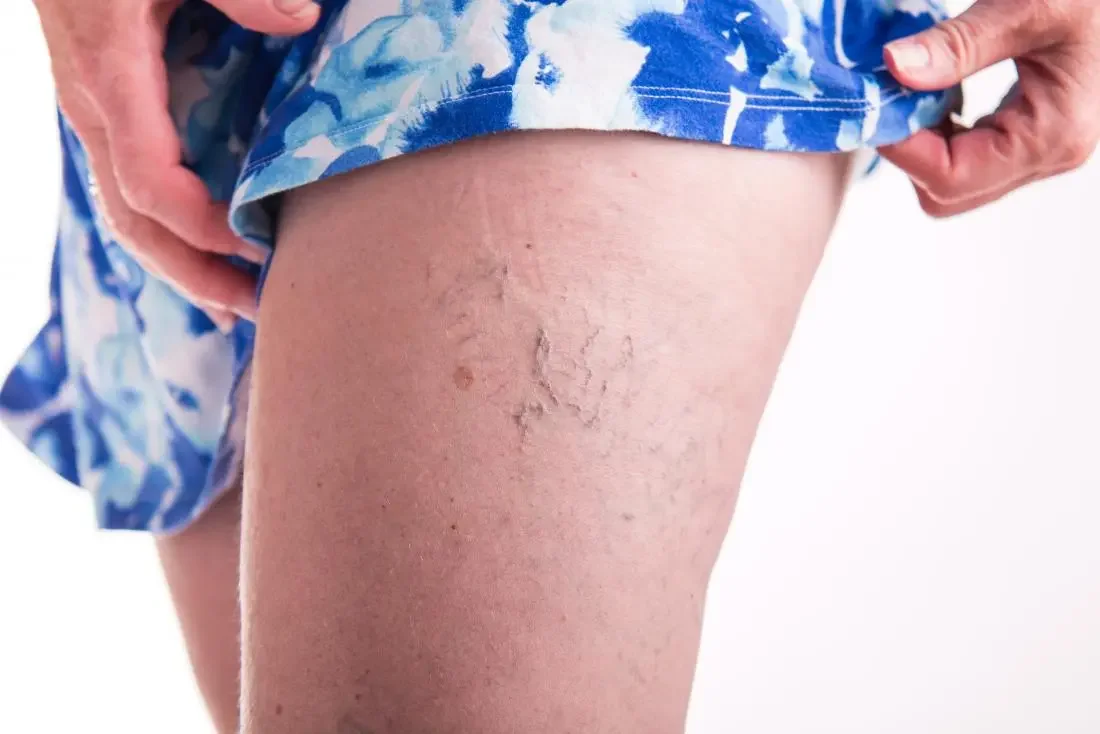
Varicose veins visible on a person's leg.
Physical activity
Maintaining a healthy weight
Taking movement breaks
Avoiding prolonged inactivity
Managing long periods of sitting or standing
Non-modifiable factors
Age
Genetics
Pregnancy history
Previous vein problems
Certain inherited traits
🦵 What Are the Common Signs to Watch For?
Active adults may dismiss certain symptoms as normal muscle fatigue or the result of a hard workout. But recurring symptoms can be worth investigating, particularly when they are not clearly connected to exercise.
Watch for:
Persistent heaviness or tiredness in the legs
Swelling around the ankles or lower legs
Aching, throbbing, or cramping
Veins that become increasingly visible or enlarged
Itching or changes in skin color
Symptoms that worsen after standing or sitting for long periods
These signs do not automatically mean you have a serious condition. They simply provide a reason to look more closely at what is happening.
🏋️ Does Exercise Prevent Varicose Veins?
Exercise is helpful, but it cannot guarantee that you will never develop varicose veins. Walking, cycling, swimming, and other activities that engage the leg muscles can support circulation. The calf muscles help push blood upward, which is especially useful when you spend a lot of time sitting or standing. However, exercise cannot repair a weakened vein valve or remove inherited risk factors. The goal is not to exercise harder to prevent every possible vein problem. It is to maintain healthy habits while recognizing when symptoms may need professional attention.
🔎 When Should Active Adults Consider an Evaluation?
You do not need to wait until symptoms become severe before asking questions. An evaluation may be appropriate if you have persistent swelling, aching, heaviness, visible veins, skin changes, or symptoms that repeatedly appear despite staying active. This is especially relevant when symptoms are becoming more frequent or begin interfering with workouts, work, sleep, or everyday activities.
🏥 How Inland Vein & Wound Specialists Can Help
Inland Vein & Wound Specialists evaluates patients based on their symptoms and individual circumstances, not simply their age or activity level. During an evaluation, the specialist may review your medical history, examine your legs, and use ultrasound imaging when appropriate to assess blood flow and vein valve function. The findings help determine whether a vein problem is contributing to your symptoms and whether treatment is needed. Recommendations are personalized to your condition rather than based on a one-size-fits-all approach.
If you are active and healthy but still noticing changes in your legs, do not assume they are simply part of getting older or exercising. Contact Inland Vein & Wound Specialists for a vein evaluation and find out what may be behind your symptoms.
❓ Frequently Asked Questions
-
Yes. Healthy habits can support circulation, but they do not eliminate factors such as genetics, age, pregnancy, or prolonged standing. Active and otherwise healthy adults can still develop vein problems.
-
Exercise supports circulation and strengthens the muscles that help move blood through the legs, but it cannot prevent every case. Some risk factors are outside your control.
-
Risk can be influenced by genetics, age, pregnancy, prolonged standing or sitting, excess weight, and previous vein problems. Several factors may work together in the same person.
-
Consider an evaluation when swelling, heaviness, aching, visible veins, or skin changes persist or interfere with daily activities. An assessment can help determine whether the symptoms are related to an underlying circulation problem.
