
Spider Veins vs. Varicose Veins: What’s the Difference and How Are They Treated?
Spider Veins vs. Varicose Veins: What's the Difference?
Not every visible vein on your legs is a varicose vein. Some appear as thin, web-like lines close to the skin, while others become raised, twisted, and much more noticeable. Knowing the difference can help you understand whether you are mainly dealing with a cosmetic concern or whether your veins may be causing symptoms that deserve a closer look.
🕸️ Spider Veins vs. Varicose Veins: How Are They Different?
Spider veins are usually small red, blue, or purple vessels that appear close to the surface of the skin. They may form branching or web-like patterns and are most commonly seen on the legs. Varicose veins are larger and more prominent. They may look twisted or rope-like and can bulge above the surface of the skin. Although both involve veins that have become more noticeable, they are not the same condition and may require different approaches.
🔍 What Is the Difference Between Spider Veins and Varicose Veins?
The most obvious difference is their size and appearance, but there are other distinctions worth knowing.
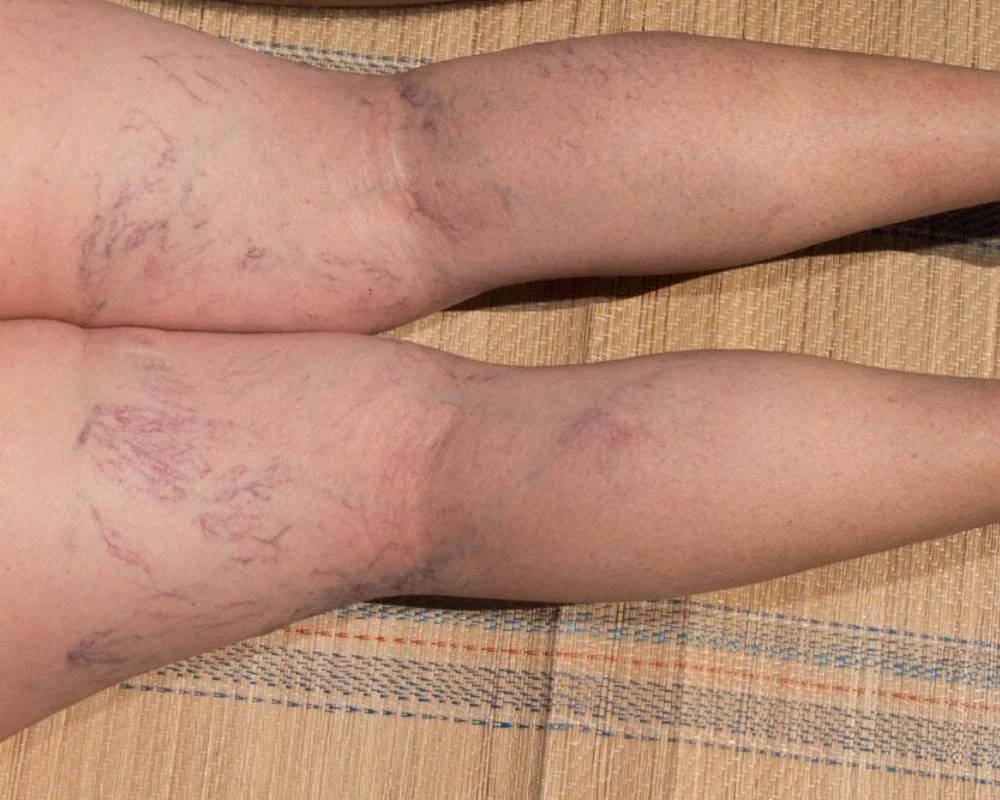
Spider veins
Spider Veins
Small, thin vessels close to the skin
Often red, blue, or purple
May form web-like or branching patterns
Often cause little or no discomfort
Frequently treated for appearance
Varicose Veins
Larger, swollen, or twisted veins
Often blue or dark purple
May appear raised or rope-like
Can be associated with aching, heaviness, or swelling
May require evaluation for an underlying circulation problem
Appearance alone, however, does not tell the whole story. Some smaller visible vessels can occur alongside a deeper vein problem, which is why an evaluation may be useful when symptoms are present.
🩺 Spider Veins and Varicose Veins: Can Both Cause Symptoms?
Spider veins often do not cause significant symptoms. Many people notice them because of their appearance rather than because their legs feel different. Larger veins are more likely to be associated with discomfort. You may notice aching, heaviness, itching, swelling, or symptoms that become more noticeable after standing or sitting for long periods. That does not mean every person with enlarged veins has a serious problem. It simply means recurring symptoms are worth discussing with a healthcare professional.
🩻 Could Varicose Veins Be Linked to Venous Reflux?
Sometimes. Inside healthy leg veins are valves that help blood move upward toward the heart. When these valves do not close properly, blood can flow backward and collect in the legs. This is known as venous reflux. Over time, abnormal blood flow can contribute to enlarged veins and symptoms such as swelling, aching, or heaviness. This is one reason a prominent vein should not always be treated based solely on appearance. A specialist may need to determine whether there is an underlying issue affecting the deeper venous system.
💉 How Are These Veins Treated?
Not every visible vessel needs treatment. If the veins are not causing symptoms and you are not concerned about their appearance, treatment may not be necessary. When treatment is desired or medically appropriate, the approach depends on the type and location of the affected vessels. Sclerotherapy is commonly used for selected smaller vessels. A solution is injected into the targeted vein, causing it to close and gradually fade. Larger veins may require a different minimally invasive approach, particularly when an underlying circulation problem is contributing to them. The appropriate procedure should be determined after evaluating the veins rather than simply choosing based on their appearance.
🎯 When Should You Consider a Vein Evaluation?
A vein evaluation can be useful when visible veins are accompanied by symptoms or are changing over time. Consider getting checked if you notice recurring leg pain, swelling, heaviness, itching, skin discoloration, or veins that are becoming increasingly prominent. An evaluation can help determine whether you are dealing with surface vessels alone or whether an underlying vein disease may also be involved.
A specialist may examine your legs and use ultrasound imaging when appropriate to assess blood flow and identify abnormal reflux.
📍 Finding the Right Treatment in Rancho Cucamonga
If you are concerned about visible veins in Rancho Cucamonga, the first step is understanding what you are actually dealing with. The right vein treatment depends on the size and location of the vessels, your symptoms, and whether there is an underlying circulation problem. Some patients may need no treatment at all, while others may benefit from injections or another minimally invasive approach. Getting the right diagnosis helps ensure that treatment addresses the actual concern rather than simply what is easiest to see.
❓ Frequently Asked Questions
-
Small web-like veins are generally thinner vessels that sit close to the surface of the skin, while larger affected veins may become raised, twisted, and more noticeable. These deeper or enlarged vessels are also more likely to cause symptoms or be associated with an underlying blood-flow problem.
-
No. They are different types of visible vein problems. Small surface vessels are closer to the skin, while larger, raised veins can extend deeper and may be associated with underlying circulation problems.
-
Not always. Many do not cause medical problems and can simply be left alone. Treatment may be considered when they are bothersome cosmetically or when an evaluation identifies a related vein concern.
-
The appropriate treatment depends on the type and size of the affected vessels and whether there is an underlying circulation problem. Injections may be used for selected smaller veins, while larger veins may require another minimally invasive approach.
📍 Know What Is Behind Your Visible Veins
Seeing new or increasingly prominent veins does not necessarily mean you need treatment. But when visible changes are accompanied by pain, swelling, heaviness, or skin changes, finding out what is happening beneath the surface can provide useful answers.
Inland Vein & Wound Specialists can evaluate your veins, identify potential underlying concerns, and help determine whether treatment is appropriate. Schedule an evaluation today to understand your vein health and available treatment options.
