
Sclerotherapy for Varicose and Spider Veins: Cost, Results, and Recovery
Sclerotherapy for Varicose and Spider Veins: Cost and Results
Those small red or blue veins may seem like a minor cosmetic concern, while larger bulging veins can come with aching, heaviness, or swelling. Either way, you may be wondering whether they can be treated without traditional surgery. Sclerotherapy is one option that uses injections to target selected veins. But whether it is appropriate depends on the size and type of vein, your symptoms, and what an evaluation reveals.
💉 Sclerotherapy for Varicose Veins: How Does It Work?
This injectable treatment uses a medication called a sclerosing solution. It is placed directly into the targeted vessel, causing the vein to close. Blood can then reroute through healthier veins. The procedure is generally used for smaller veins, although certain small varicose veins may also be suitable. Larger veins with underlying valve problems may require a different approach. That distinction matters. A vein that is visible on the surface may be connected to a deeper circulation issue, so treatment should not be selected based on appearance alone.
🕸️ Sclerotherapy for Spider Veins
Spider veins are small, web-like vessels that commonly appear on the legs. Because of their size and location, injections can be an effective option for selected vessels. During treatment, the solution is carefully introduced into the targeted veins. Over time, the treated vessels gradually become less noticeable as the body processes them. The number of veins being treated and their individual characteristics can influence how much improvement you see and whether additional sessions are recommended.
🩺 What Happens During Treatment?
Before treatment, a vein specialist will evaluate the veins and your symptoms to determine whether this approach is appropriate. During the procedure, the skin is cleaned and the selected vessels are injected. The number of injections depends on how many veins are being treated.
You may notice mild stinging or discomfort during the injections. Temporary redness, bruising, or tenderness can also occur afterward. Your provider will give you specific instructions for activity, compression, and follow-up based on your individual treatment.
⏳ How Many Treatment Sessions Might You Need?
There is no set number of sessions that works for everyone. A small number of veins may require less treatment, while multiple or widespread vessels may need several appointments. Some veins may also respond more slowly than others. Additional sessions are not necessarily a sign that treatment did not work. They may simply be needed to address remaining vessels or achieve further improvement.
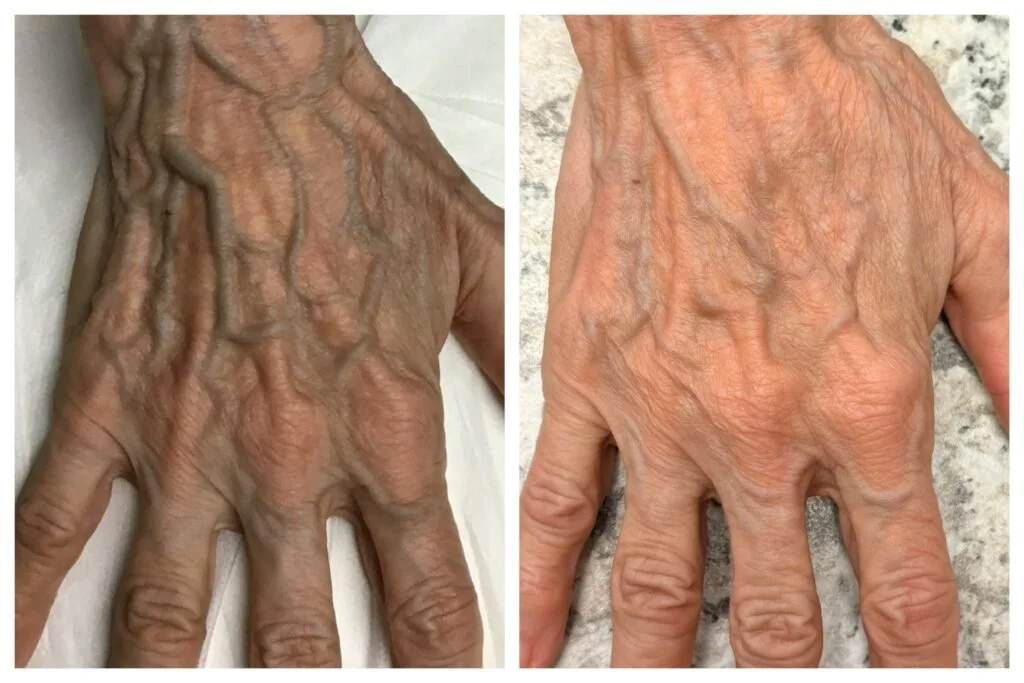
Prominent veins on the back of the hand
📈 When Can You Expect Treatment Results?
The treated veins do not usually disappear immediately. Smaller vessels may gradually become less visible over the following weeks, while larger treated veins can take longer to fade. The timeline varies depending on the size of the vessels, the number treated, and how your body responds. It is also possible for new veins to develop over time, so treatment does not guarantee that new visible vessels will never appear.
💰 Sclerotherapy Cost: What Affects the Price?
There is no single price for every patient. The overall cost can depend on the number of veins being treated, the size and extent of the affected areas, how many sessions are recommended, and whether additional evaluation is needed. Your reason for treatment can also matter. When visible veins are being treated primarily for cosmetic reasons, insurance coverage may differ from care that is considered medically necessary because of symptoms or an underlying vein condition. Rather than relying on a general online estimate, an evaluation can provide a more accurate understanding of the care you may need and its potential cost.
🩻 Why an Evaluation Comes First
Not every visible vein should automatically be treated with injections. A specialist may assess your symptoms, examine the affected areas, and use imaging when appropriate to determine whether there is an underlying problem with blood flow. If a larger vein is contributing to the smaller vessels you can see on the skin, addressing that issue may be important before focusing on the surface veins. This helps ensure that the chosen approach matches the actual vein problem rather than treating appearance alone.
🧦 What Is Recovery Like?
Recovery is generally straightforward, although the experience varies from person to person. You may have temporary bruising, redness, swelling, or tenderness around the treated areas. Your provider may recommend walking soon after treatment and may advise compression depending on your individual circumstances. Following your aftercare instructions can support healing and help you understand what changes are expected during the recovery period.
🎯 Is Sclerotherapy Right for You?
The right treatment depends on what type of veins you have and what is causing them. For selected spider veins and smaller varicose veins, injections may offer a practical treatment option. Larger veins or symptoms caused by an underlying circulation problem may require a different approach. At Inland Vein & Wound Specialists, an evaluation can help determine whether this treatment is appropriate for your veins and what results you may reasonably expect.
❓ Frequently Asked Questions
-
The cost varies depending on the number and size of veins being treated, the number of sessions needed, and whether additional evaluation is required. An individual consultation is the best way to understand the potential cost for your situation.
-
It can be effective for selected smaller varicose veins. Larger veins or those associated with an underlying valve problem may require another type of treatment.
-
There is no fixed number of sessions. Some patients may need only one, while others require multiple treatments depending on the number of vessels involved and how they respond.
-
Improvement usually occurs gradually rather than immediately. Smaller vessels may fade over several weeks, while larger veins can take longer, and the timeline varies from patient to patient.
📍 Find Out If This Treatment Fits Your Veins
If visible veins are bothering you, the first step is finding out whether injections are actually the right solution. An evaluation can help distinguish smaller surface vessels from problems that may require a different approach.
Inland Vein & Wound Specialists can assess your veins, explain your options, and help you understand what to expect from treatment.
Schedule an evaluation today to explore the right approach for your vein concerns.
