
What to Expect at Your First Vein Specialist Appointment
What to Expect at Your First Vein Specialist Appointment
Not sure what happens when you walk into your first vein appointment? You will usually start by discussing your symptoms and medical history, followed by an examination of your legs. Depending on what the provider finds, additional testing may be recommended. Knowing what to expect can make the visit feel much more straightforward and help you prepare the right questions.
🩺 What Happens During a Vein Specialist Appointment?
A vein specialist appointment typically begins with a conversation about what you have been experiencing. You may be asked when your symptoms started, whether they come and go, and whether certain activities or times of day make them worse.
The provider may ask about aching, heaviness, swelling, itching, visible veins, skin changes, or other concerns. They will also review relevant medical history to understand your overall health and identify factors that may affect your circulation. The goal is not simply to look at visible veins. Your provider is trying to determine whether your symptoms may be connected to an underlying venous problem and what should happen next.
Healthcare provider consulting a patient in a medical examination room
📋 What Should You Bring to Your First Visit?
A little preparation can make the conversation more useful. Before your appointment, think about the symptoms you have noticed and how they affect your daily activities. It can also help to bring a list of current medications, relevant medical records, previous imaging or test results, and information about past procedures involving your veins. If you have questions about symptoms, treatment, insurance, or recovery, writing them down beforehand can help ensure you do not forget them during the visit. You do not need to arrive with a diagnosis. Simply being able to describe what you have noticed and when it occurs gives the provider useful information.
🩻 What Happens During a Vein Consultation?
During a vein consultation, the provider will typically review your symptoms and medical history before examining the affected area.
The physical examination may involve looking at the appearance of the veins, checking for swelling or skin changes, and assessing the legs while you are standing or in another appropriate position. The provider may also ask about tenderness or other symptoms. This assessment helps determine whether your concerns appear related to venous disease and whether further diagnostic testing would be useful.
🔎 Will You Need a Duplex Ultrasound?
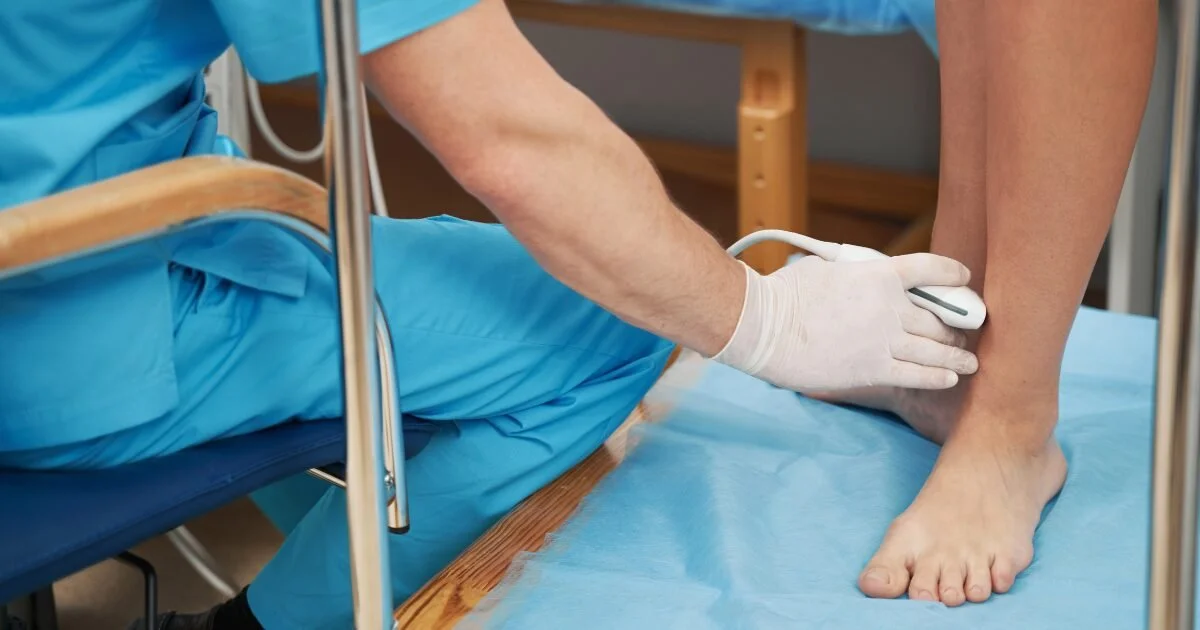
A duplex ultrasound may be recommended when the provider needs more information about how blood is moving through your veins.
The test can help identify venous reflux, which occurs when blood does not move upward through the veins as efficiently as it should. It can also provide information about the location and function of affected vessels. However, not every patient will need an ultrasound during the first visit. Whether imaging is appropriate depends on your symptoms, physical findings, medical history, and the provider's clinical assessment.
🧠 What Is the Provider Trying to Determine?
The purpose of the initial visit is to connect your symptoms with what may be happening inside your veins. The provider may be trying to determine whether visible veins are primarily a cosmetic concern or whether they are associated with an underlying circulation problem. They may also look for signs that could point toward venous reflux or another condition requiring additional evaluation.
Your symptoms, examination findings, and any available imaging can help determine whether you need monitoring, conservative measures, further testing, or treatment.
📝 Will You Get a Treatment Plan Right Away?
Not necessarily. Some patients may be able to discuss appropriate vein treatment options during the first visit, while others may need additional testing before a recommendation can be made. If imaging is needed, the results can provide a clearer picture of which vessels are affected and whether a procedure may be appropriate. Depending on the findings, options could include conservative care, sclerotherapy, vein ablation, or another approach.
The goal is to recommend care based on what your evaluation shows rather than assuming that every patient needs the same treatment.
👕 How Should You Prepare for the Appointment?
There is usually no complicated preparation required for an initial visit, but wearing comfortable clothing can make it easier for the provider to examine your legs. Try to arrive with a general idea of when your symptoms occur. For example, note whether swelling becomes more noticeable later in the day, whether discomfort increases after standing for long periods, or whether symptoms improve when you elevate your legs.
These details may seem minor, but they can help your provider understand the pattern of your symptoms.
❓ Questions to Ask Your Provider
Your first appointment is also an opportunity to get answers. Consider asking:
What could be causing my symptoms?
Do my symptoms appear related to a vein problem?
Do I need an ultrasound or other testing?
What treatment options may be appropriate if a problem is found?
Are there conservative steps I should try first?
What should I expect if further treatment is recommended?
A good appointment should leave you with a clearer understanding of what was found and what the next step may be.
❓ Frequently Asked Questions
-
You will typically discuss your symptoms and medical history before having a physical examination. Depending on what the provider finds, additional testing such as an ultrasound may be recommended.
-
Bring a list of current medications, relevant medical records, previous test or imaging results, and information about any past vein procedures. It is also helpful to prepare a short list of your symptoms and questions.
-
Not always. A duplex ultrasound may be recommended when the provider needs to evaluate blood flow or check for venous reflux, but the decision depends on your symptoms and initial examination.
-
Sometimes, but not in every case. If the cause of your symptoms is clear, treatment options may be discussed during the initial visit. If more information is needed, the provider may recommend additional te
📍 Ready for Your First Vein Evaluation?
You do not need to know exactly what is causing your symptoms before making an appointment. A thorough assessment can help determine whether your concerns are related to your veins and whether further testing or treatment is appropriate.
Inland Vein & Wound Specialists provides focused evaluation for patients dealing with vein-related symptoms and can help guide you through the next steps based on your individual findings.
Schedule your appointment today and take the first step toward understanding your vein health.
