
Skin Discoloration Around Ankles and Vein Disease
Skin Discoloration Around the Ankles and Vein Disease
Dark, brown, red, or patchy skin near the ankles can feel like a skin problem at first. But when the discoloration appears with swelling, heaviness, itching, or visible vein changes, the issue may be coming from your circulation. Skin discoloration around ankles should not be ignored when it keeps getting darker or spreads over time. In many patients, ankle skin changes are one of the signs that pressure inside the leg veins has been building for too long.
🦶 Why Skin Color Changes Around the Ankles
The ankles are one of the first places where vein-related skin changes can appear because fluid and pressure often collect in the lower legs. When blood does not move upward efficiently, the skin around the ankles may become irritated, darker, dry, or sensitive. At first, the change may look like mild staining, redness, or uneven patches. Over time, the area may turn brown, feel tight, itch, or become more fragile. This is why brown ankles vein disease concerns should be evaluated instead of treated as simple dryness or normal aging.
🩸 How Vein Disease Affects Skin Health
Vein disease can affect the skin when pressure builds inside the lower leg veins. The skin depends on healthy circulation, so ongoing pressure, swelling, and inflammation can gradually change its color and texture.
Chronic Venous Insufficiency
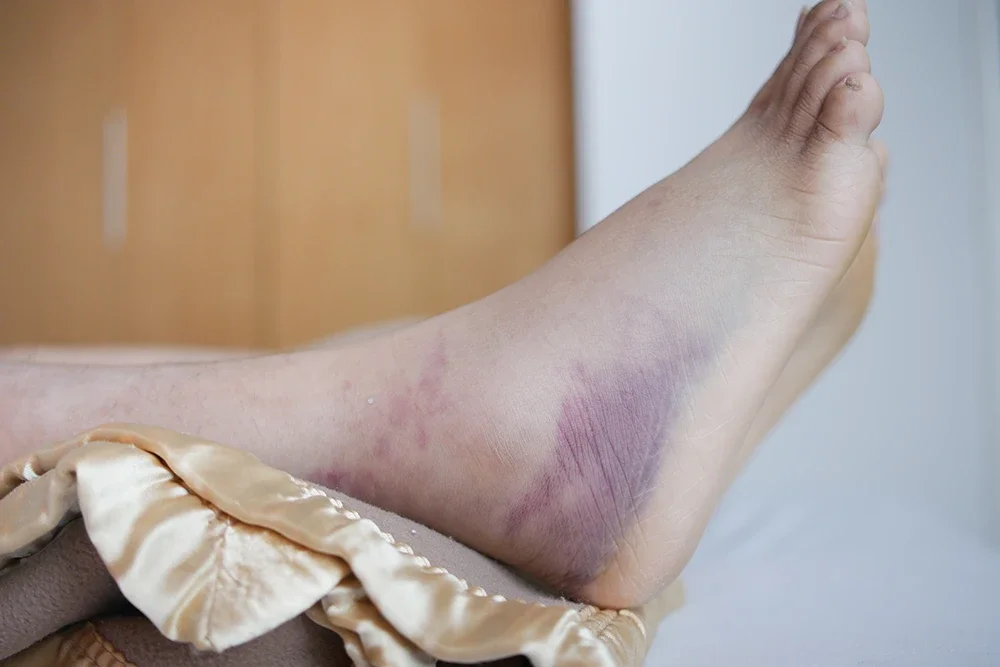
Close-up of discolored skin around the ankle and foot.
Chronic venous insufficiency happens when valves inside the leg veins do not move blood upward properly. Instead of flowing smoothly back toward the heart, blood can collect in the lower legs and increase pressure around the ankles. Common chronic venous insufficiency skin changes may include brown discoloration, redness, itching, dryness, thickened skin, irritation, and slow-healing areas. These changes can become more noticeable when swelling is also present.
Iron Deposits Beneath the Skin
When pressure stays high inside the veins, tiny amounts of blood can leak into the surrounding tissue. As red blood cells break down, iron can be left behind beneath the skin. This can create a brown or rust-colored appearance around the ankles or lower legs. Once staining develops, it may not fade quickly, especially if the underlying vein problem is still present.
Inflammation and Reduced Circulation
Poor vein function can also lead to inflammation in the surrounding tissue. The skin may feel itchy, warm, tight, flaky, or more sensitive than usual. Poor circulation skin discoloration can become more concerning when it appears with swelling, tenderness, heaviness, or skin that becomes hard or shiny. These signs may mean the skin is under ongoing stress from circulation problems.
🚩 When Skin Discoloration Signals a More Serious Problem
Skin discoloration should be checked when it keeps getting darker, spreads around the ankles, appears with swelling, or comes with itching, pain, tenderness, thickened skin, or visible veins. It is especially important to seek evaluation if the skin becomes cracked, starts leaking fluid, develops open sores, or does not heal normally. These changes may indicate that vein disease has progressed and the skin is no longer getting the support it needs from healthy circulation. Sudden swelling, redness, warmth, or severe pain should also be taken seriously. These symptoms may need prompt medical attention to rule out other problems.
✅ Treatments That Protect Skin and Vein Health
Treatment starts with finding out why the skin is changing. A vein specialist may review symptoms, examine the legs, and use ultrasound imaging to check blood flow and valve function. If vein disease is contributing to the discoloration, care may include compression therapy, leg elevation, walking, movement breaks, skin protection, and lifestyle guidance. These steps can help reduce pressure and swelling, but they may not correct damaged veins on their own. When problem veins are causing ongoing pressure, minimally invasive treatments may be recommended. These procedures are designed to close affected veins and redirect blood through healthier vessels. Early treatment can help protect the skin, reduce discomfort, and lower the risk of ulcers or long-term skin damage.
❓ Frequently Asked Questions
-
The skin around your ankles may turn brown when pressure inside the leg veins causes blood cells to leak into nearby tissue. As those cells break down, iron pigment can remain under the skin and create a brown or rust-colored stain.
-
Yes. Poor circulation can contribute to skin discoloration, especially around the ankles and lower legs. When blood flow is not working properly, pressure, swelling, and inflammation can affect the skin over time.
-
Ankle discoloration may improve if the underlying cause is treated early, but darker staining can be difficult to reverse once it has been present for a long time. Treating the vein problem can help prevent further skin damage.
-
You should see a vein specialist if ankle discoloration keeps spreading, appears with swelling or heaviness, becomes itchy or painful, or comes with visible veins, skin thickening, or slow-healing sores.
