
Burning Legs at Night: Could It Be Vein Disease?
Burning Legs at Night: Signs of Vein Disease
A burning feeling in your legs can be hard to ignore, especially when it shows up at night and keeps you from resting comfortably. Sometimes it may be linked to tired muscles, nerves, or daily strain. But when the burning comes with swelling, heaviness, aching, visible veins, or skin changes, it may be a sign that your leg circulation needs attention.
🌙 Why Legs May Burn During the Evening
Evening symptoms often appear after the legs have spent the day working against gravity. Long hours of sitting, standing, walking, or working can increase pressure in the lower legs, especially when the veins are not moving blood upward efficiently. This is one reason burning legs at night may feel worse after a full day. The discomfort may settle in around the calves, ankles, or lower legs and may feel like warmth, tingling, tightness, or irritation beneath the skin.
🩸 How Vein Disease Can Cause a Burning Sensation
Vein-related burning is not always obvious at first. Many patients assume the problem is muscle fatigue, dry skin, or nerve pain. But when the same sensation keeps returning with other leg symptoms, vein function should be evaluated.
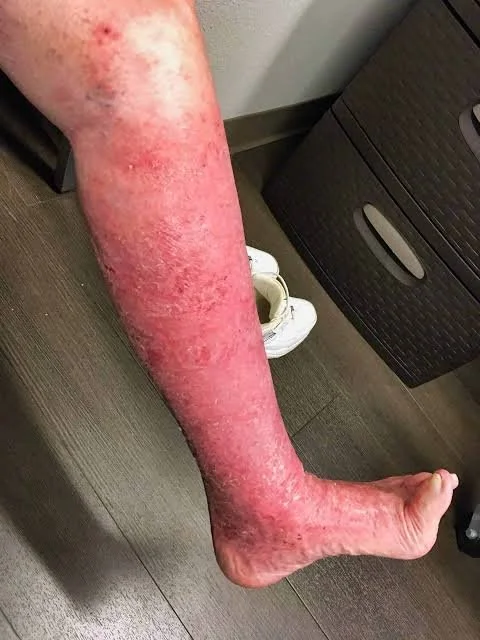
Red, irritated lower leg with burning discomfort near the ankle.
Increased Venous Pressure
Healthy leg veins use one-way valves to help blood move back toward the heart. When those valves weaken, blood can collect in the lower legs and increase pressure inside the veins.
This added pressure may irritate surrounding tissue and create heaviness, aching, swelling, or a burning feeling. In these cases, burning legs vein disease concerns become more important because the symptom may be connected to an underlying circulation issue.
Inflammation of Affected Veins
When veins stay under pressure, the surrounding area may become irritated or inflamed. This can make the legs feel tender, warm, itchy, or uncomfortable, especially near visible or enlarged veins.
Inflammation may also affect the skin over time. Patients may notice dryness, redness, discoloration, or sensitivity around the lower legs or ankles. These changes should not be ignored if they continue or get worse.
Reduced Blood Circulation
When blood flow slows in the legs, tissues may not feel as comfortable by the end of the day. Some people describe the sensation as burning, tingling, tightness, or deep discomfort. Poor circulation symptoms can also include swelling, leg fatigue, heaviness, cramping, coldness, skin color changes, or discomfort that improves with elevation. Burning alone does not confirm a vein problem, but it can be part of a larger pattern.
🚩 Other Symptoms That May Occur Together
Burning in the legs may be more concerning when it appears with swelling around the ankles, leg heaviness, aching, throbbing, cramping, itching, restless legs, visible veins, or skin changes.
The timing also matters. If symptoms feel worse after standing or sitting for long periods and improve when you elevate your legs, circulation may be involved. Chronic vein disease symptoms often build slowly, so early warning signs can be easy to dismiss at first.
Medical evaluation is especially important if burning pain is frequent, affects daily comfort, disrupts sleep, or appears with redness, warmth, sudden swelling, open sores, or skin discoloration. These symptoms may need prompt attention.
✅ Effective Treatments for Burning Leg Symptoms
Treatment depends on the cause of the burning sensation. If symptoms are linked to poor vein function, the goal is to reduce pressure in the legs and improve how blood moves through the veins. A vein specialist may begin with a symptom review, physical exam, and ultrasound evaluation to check blood flow and valve function. Depending on the findings, care may include walking guidance, leg elevation, compression therapy, hydration, and lifestyle changes that support circulation.
When damaged veins are contributing to symptoms, minimally invasive treatments may be recommended. These procedures are designed to close problem veins and redirect blood through healthier vessels. A vein specialist can evaluate the cause of burning, swelling, and discomfort, then recommend treatment based on the patient’s actual vein health.
❓ Frequently Asked Questions
Why Do My Legs Burn at Night?
Your legs may burn at night because pressure, swelling, nerve irritation, muscle fatigue, or circulation issues become more noticeable after a full day of activity. If the symptom keeps returning with heaviness or swelling, a vein evaluation may be helpful.
Can Poor Circulation Cause Burning Legs?
Yes, poor circulation can sometimes contribute to burning, tingling, heaviness, swelling, or discomfort in the legs. A specialist can help determine whether the symptom is related to vein function or another cause.
Is Burning Pain a Symptom of Vein Disease?
Burning pain can be a symptom of vein disease, especially when it appears with swelling, aching, visible veins, itching, or skin changes. It should not be ignored if it happens often or worsens over time.
When Should I See a Vein Specialist?
You should consider seeing a vein specialist if burning leg symptoms keep returning, disrupt sleep, worsen after sitting or standing, or appear with swelling, heaviness, visible veins, or skin changes.
