
Why Is One Leg More Swollen Than the Other?
Why One Leg Is More Swollen Than the Other
Noticing one leg swollen more than the other can feel confusing, especially if there was no clear injury. Sometimes the cause is mild, but one-sided swelling can also point to a circulation problem that needs medical attention. If the swelling keeps returning, gets worse after standing or sitting, or appears with pain, heaviness, visible veins, or skin changes, it is worth taking seriously. The goal is to find out whether the problem is coming from vein disease, fluid buildup, a clot, or another condition.
🦵 Why Swelling Can Affect Only One Leg
Swelling does not always happen evenly in both legs. One leg may be affected more if there is a vein problem, injury, inflammation, lymphatic issue, or blockage that limits how fluid moves out of that leg. Some patients notice swelling in one leg after a long workday, travel, or extended time on their feet. Others may notice that one ankle, calf, or lower leg looks larger by evening. When one leg larger than the other becomes a recurring pattern, it should be evaluated instead of ignored.
🩸 Vein Conditions That Cause One-Sided Leg Swelling
Vein-related swelling can happen when blood does not move upward from the leg as efficiently as it should. In some patients, the issue develops slowly. In others, swelling may appear suddenly and need urgent attention.
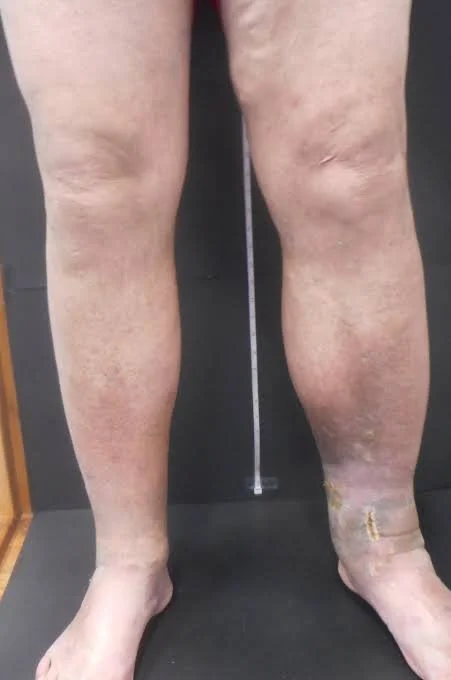
One leg visibly more swollen with ankle skin changes.
Venous Insufficiency
Venous insufficiency happens when the valves inside the leg veins do not close properly. Instead of blood moving smoothly back toward the heart, some of it can flow backward and collect in the lower leg.
This pressure may cause swelling, heaviness, aching, throbbing, itching, visible veins, or skin changes. Vein disease swelling may affect one leg more than the other depending on which veins are damaged and how severe the circulation problem is.
Deep Vein Thrombosis (DVT)
Deep vein thrombosis, or DVT, is a blood clot that forms in a deep vein, often in the leg. It can cause one-sided swelling, pain, tenderness, warmth, redness, or skin color changes. DVT is important because a clot can become dangerous if it travels to the lungs. Sudden swelling in one leg should not be treated as a routine vein symptom until serious causes have been ruled out.
Lymphedema and Other Conditions
Lymphedema can also cause one leg to swell when fluid does not drain properly through the lymphatic system. This swelling may feel heavy, tight, or persistent and may not improve quickly with rest. Other causes can include injury, infection, inflammation, medication side effects, heart or kidney concerns, or previous surgery. Because several conditions can look similar, a proper diagnosis is the safest way to know what is causing the swelling.
🚨 When One-Sided Swelling Requires Immediate Medical Care
One-sided swelling needs immediate medical attention if it appears suddenly, becomes painful, feels warm, looks red, or is accompanied by tenderness in the calf or thigh. These symptoms may suggest a clot or another urgent issue. Seek emergency care right away if leg swelling appears with shortness of breath, chest pain, rapid breathing, dizziness, fainting, or coughing blood. These can be warning signs of a pulmonary embolism, which requires urgent treatment. Even when symptoms are not severe, swelling that keeps returning should still be evaluated. Waiting too long can allow an underlying vein or circulation problem to progress.
🔍 Diagnosis and Treatment Options
Diagnosis usually starts with a review of symptoms, medical history, and a physical exam. A specialist may check for swelling patterns, visible veins, skin changes, tenderness, warmth, and differences between both legs. Ultrasound imaging may be used to check blood flow, valve function, and whether a clot or vein problem is present. Treatment depends on the cause. Care may include compression therapy, walking guidance, leg elevation, medication when needed, or minimally invasive vein treatment if damaged veins are contributing to symptoms. The right plan should focus on the cause, not just the swelling itself. Once the reason is clear, a vein specialist can recommend care that helps reduce pressure, improve comfort, and lower the risk of symptoms getting worse.
❓ Frequently Asked Questions
-
Only one leg may swell because of vein disease, a blood clot, lymphedema, injury, infection, inflammation, or another medical condition affecting that side. A proper evaluation helps identify the cause.
-
Yes. Varicose veins and venous insufficiency can affect one leg more than the other. The swelling may depend on which veins are damaged and how well blood is moving through that leg.
-
One-sided swelling is an emergency if it appears suddenly or comes with pain, warmth, redness, tenderness, shortness of breath, chest pain, fainting, or coughing blood. These symptoms need urgent medical care.
-
The cause is diagnosed through a symptom review, physical exam, and sometimes ultrasound testing. Ultrasound can help check blood flow, vein valve function, and whether a clot or circulation problem is present.
