
When Aren’t Compression Socks Enough for Varicose Veins?
You have been wearing compression socks, but your legs are still swollen, heavy, or uncomfortable. So, what comes next? Compression can be helpful for managing symptoms, but it does not correct every problem affecting the veins. If your symptoms continue despite consistent use, the next step may be finding out whether an underlying circulation issue is still present.
🧦 When Compression Socks Are Not Enough for Varicose Veins
So, when compression socks are not enough for varicose veins? It depends on what you are trying to manage. Compression can support circulation and reduce symptoms, but it does not directly close a faulty vein or correct damaged valves. Compression therapy works by applying graduated pressure to the legs. This can support upward blood flow and reduce the amount of fluid that collects in the lower legs. For people dealing with swelling, aching, or heaviness, properly fitted compression stockings may provide noticeable relief. But symptom relief does not necessarily mean the underlying problem has been corrected. If abnormal blood flow continues, the same symptoms may return when the compression is removed.
🩺 What Can Compression Actually Do?
Compression is mainly a symptom-management tool. It can help limit fluid buildup, support circulation, and make the legs feel more comfortable, particularly after long periods of standing or sitting. This can make it a useful part of care even when a patient eventually needs another form of treatment. Using compression does not mean that you have failed to treat the problem. In some situations, it may remain useful alongside other care. The important distinction is that compression supports the veins from the outside. It does not eliminate the underlying vessel responsible for abnormal blood flow.
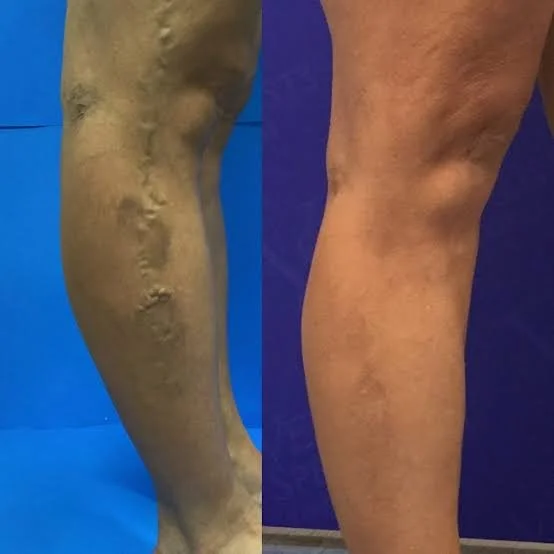
Side-by-side before and after photo showing prominent varicose veins on a calf fully resolved following medical treatment
🔎 What Can Compression Not Fix?
Do compression socks treat varicose veins themselves? Not usually. They may reduce discomfort and swelling, but they do not remove visible veins or correct the faulty valves that can allow blood to flow backward. When venous reflux is present, blood can move in the wrong direction and increase pressure within the affected vessel. This can contribute to enlarged veins and symptoms that continue despite wearing compression. If your legs continue to feel uncomfortable or your visible veins are becoming more prominent, it may be worth finding out whether reflux is contributing to the problem.
⚖️ Compression Socks vs. Varicose Vein Treatment
Compression Socks vs Varicose Vein Treatment
Compression and medical treatment serve different purposes. Compression can help control symptoms, while vein treatment may address an abnormal vessel when testing shows that it is contributing to the problem. For example, some patients with significant reflux may be candidates for procedures that close the affected vein. Others may have smaller surface vessels that are better suited to an injectable approach. Some people may not need a procedure at all. That is why the question should not be whether compression is better or worse than a procedure. The more useful question is whether compression is adequately managing your symptoms and whether an underlying problem still needs attention.
🦵 When Should You Consider More Than Compression?
If swelling, aching, heaviness, itching, or other symptoms continue despite appropriate use of compression, consider speaking with a healthcare professional. It is also worth getting evaluated if the veins are becoming increasingly prominent or if you notice skin discoloration, irritation, inflammation, or wounds around the lower legs. These changes can sometimes occur when a circulation problem has been present for a longer period. You do not necessarily need treatment just because compression has not eliminated your symptoms. An evaluation can help determine whether another approach is appropriate.
🩻 What Can a Venous Ultrasound Show?
A venous ultrasound can provide information that compression socks cannot. Duplex imaging allows a provider to see how blood is moving through the vessels and determine whether abnormal backward flow is present. This can be particularly useful when venous insufficiency is suspected. The results may show which veins are affected, how significant the reflux is, and whether a specific vessel may be contributing to your symptoms. The findings can then help guide the next step. You may be advised to continue conservative measures, or you may be offered a minimally invasive procedure if the underlying anatomy supports it.
🔥 What Treatment Options May Be Considered?
If imaging identifies a refluxing vein that is contributing to your symptoms, a vein specialist may discuss minimally invasive options. RFA uses controlled radiofrequency energy to close a targeted vessel from inside the vein. Another approach may use laser energy to achieve a similar result. For selected smaller vessels, sclerotherapy uses an injectable solution to close the treated vein. These procedures are not automatically required for everyone who wears compression. The choice depends on the location and size of the affected vessels, the severity of the reflux, your symptoms, and your overall evaluation.
🚶 Can Compression Still Help After Treatment?
Yes. Compression is not necessarily something you stop using just because another treatment has been performed. Depending on the procedure and your individual circumstances, your provider may recommend compression afterward as part of your care. Instructions can vary, so follow the specific guidance provided rather than assuming that the same schedule applies to every patient. This is another reason compression should not be viewed as a failed treatment. It can have a useful role before, during, or after other forms of care when recommended.
🚩 When Should You Get Evaluated?
If you have tried compression consistently but continue to experience symptoms, an evaluation can help determine whether there is more going on beneath the surface. A provider may assess your symptoms, examine your legs, and recommend imaging when appropriate. This can help identify whether chronic venous disease is contributing to your concerns and whether continued conservative management or another option makes sense. The goal is not to move every patient from compression directly to a procedure. It is to understand why your symptoms are continuing and choose the appropriate next step.
📍 What Should You Do If Compression Isn't Helping Enough?
If compression provides some relief but your symptoms keep returning, that does not necessarily mean you are doing anything wrong. It may simply mean that symptom management is not addressing the source of the problem. For patients in Rancho Cucamonga and surrounding communities, a focused evaluation can help determine whether abnormal blood flow is present and whether additional care may be appropriate. Schedule an evaluation to find out what is behind your symptoms and whether you may benefit from treatment beyond compression.
❓ Frequently Asked Questions
-
Compression can help manage symptoms such as swelling and discomfort, but it does not eliminate the underlying reflux responsible for many varicose veins.
-
Persistent symptoms, progressive visible veins, skin changes, ulcers, or other complications may warrant evaluation for treatment of the underlying vein problem.
-
Compression may be recommended after certain procedures, depending on the treatment and individual circumstances. Patients should follow their provider's instructions.
