
Do You Really Need Treatment for Your Varicose Veins?
Not every visible vein needs to be treated. Some people have enlarged veins that cause little or no discomfort, while others notice aching, swelling, or changes in their skin over time. So, do varicose veins need treatment? The answer depends on what your veins are doing, how you feel, whether there are signs of an underlying circulation problem, and what an evaluation shows.
👀 Visible Veins With No Symptoms
If you have visible varicose veins but they are not painful, swollen, irritated, or changing, treatment may not be medically necessary. Some people choose to treat visible veins because they do not like their appearance, while others prefer to leave them alone. Either choice can be reasonable depending on your circumstances and goals. However, appearance alone cannot always tell you whether an underlying problem is present. If you are unsure whether your veins are simply a cosmetic concern or something that should be evaluated, speaking with a healthcare professional can give you more clarity.
🦵 When Do Varicose Veins Need Treatment?
When do varicose veins need treatment?
The question of when do varicose veins need treatment becomes more important when symptoms begin affecting your everyday life. Persistent leg pain, aching, heaviness, itching, or leg swelling may indicate that the veins are contributing to more than an appearance concern. Symptoms can become more noticeable after standing or sitting for long periods and may improve when you rest or elevate your legs. While these patterns can be associated with vein problems, they do not confirm a diagnosis on their own. If symptoms are persistent or getting worse, an evaluation can help determine whether an underlying issue such as venous insufficiency is involved.
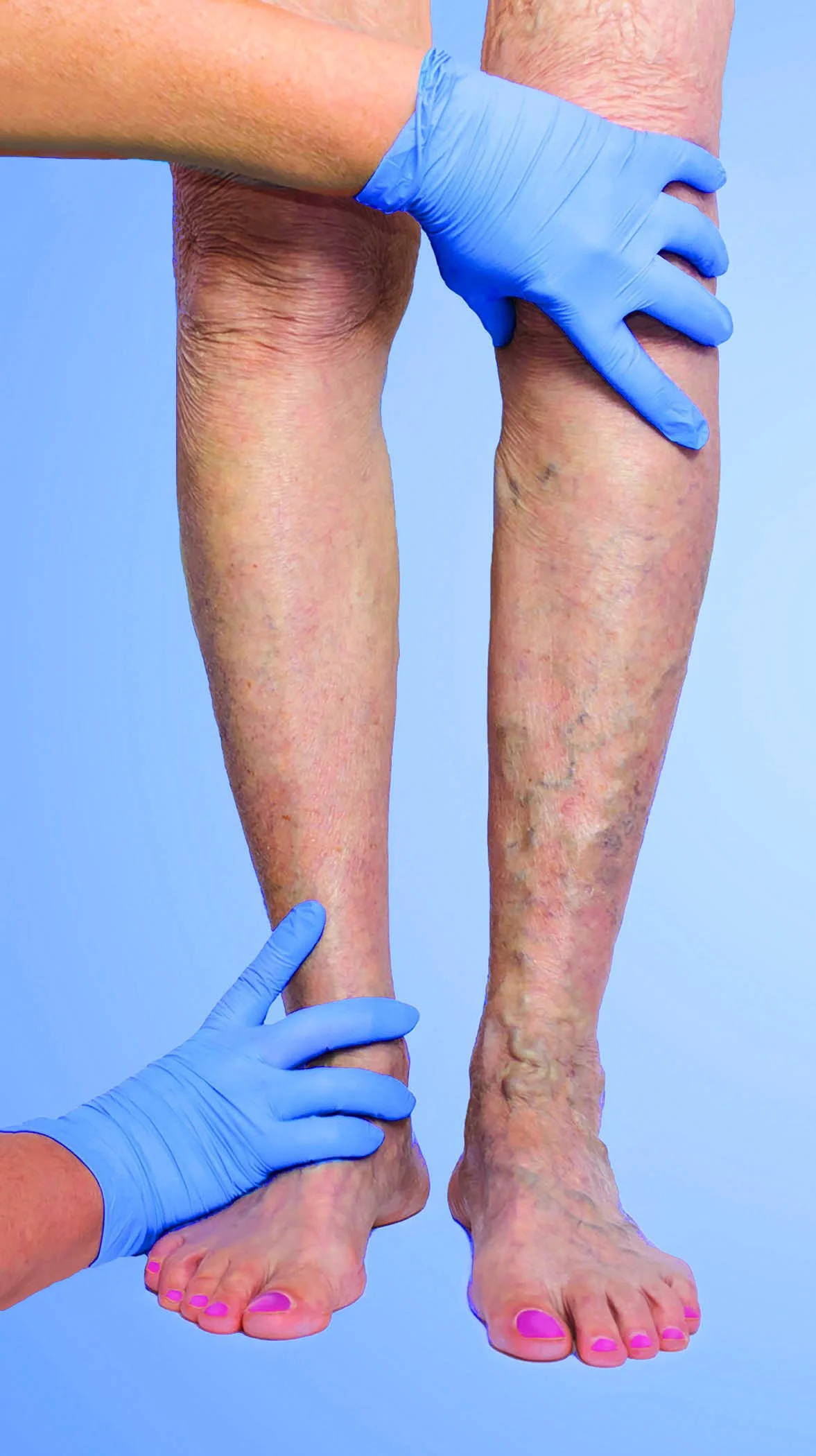
Doctor wearing blue gloves conducting a physical examination of a patient's lower legs affected by varicose veins
🔎 Symptomatic Veins Deserve a Closer Look
When enlarged veins are accompanied by ongoing discomfort, it is worth finding out what is happening beneath the surface. Venous reflux occurs when valves inside a vein do not close effectively, allowing blood to move backward and increasing pressure within the vessel. Over time, this can contribute to swelling, aching, heaviness, and increasingly prominent veins. That does not mean every person with symptoms automatically needs a procedure. It means the symptoms provide a reason to investigate the cause rather than simply assuming they are harmless or purely cosmetic.
📈 What If the Problem Keeps Progressing?
Should varicose veins be treated?
Whether should varicose veins be treated is not a simple yes-or-no question. If visible veins are becoming increasingly prominent or symptoms are becoming more frequent, an evaluation can help determine whether the condition is progressing. In some people, an underlying circulation problem remains relatively stable. In others, ongoing pressure within the veins can eventually contribute to swelling, skin irritation, or other changes. Progression is not inevitable, and not everyone will develop complications. The purpose of evaluation is to understand your individual situation and decide whether monitoring or treatment makes sense.
🟤 What Do Skin Changes Mean?
Changes in the skin around the lower legs can be another reason to seek professional advice. Skin discoloration, dryness, irritation, thickening, or inflammation can sometimes occur when circulation problems have been present for an extended period. These changes do not automatically mean that you have advanced disease. However, new or worsening changes should not be ignored, particularly when they occur alongside persistent swelling or discomfort.
A proper assessment can help determine whether the skin changes may be related to the veins or whether another condition should be considered.
🩹 What About Venous Ulcers?
In more advanced cases of chronic vein problems, venous ulcers can develop, often around the ankle or lower leg. These are open wounds associated with long-standing circulation issues and require medical attention. An ulcer does not develop in everyone with visible veins. But if you have a wound that is slow to heal or keeps returning, it is important to have it evaluated rather than assuming it will resolve on its own. Early assessment may help identify the underlying problem and determine what type of care is appropriate.
🩸 What If Your Veins Bleed?
Prominent surface veins can sometimes bleed if they are injured. Bleeding varicose veins should be taken seriously, especially if the bleeding is significant or difficult to stop. Apply firm direct pressure with clean material and seek prompt medical care if the bleeding does not stop or is substantial. Even when the bleeding resolves, recurrent episodes are a reason to have the affected veins assessed.
🩻 Why Is an Ultrasound Part of the Evaluation?
A duplex ultrasound can help show what is happening inside the veins rather than relying only on their appearance. The test can evaluate blood flow, identify reflux, and provide information about the location and function of affected vessels. This can help determine whether symptoms are connected to an underlying venous problem and whether treatment should be considered. A vein evaluation does not automatically mean you will be advised to have a procedure. It is simply a way to gather the information needed to make an informed decision.
💡 What Treatment Options Are Available?
If an evaluation shows that treatment may be beneficial, the appropriate approach depends on your specific findings. Some patients may benefit from conservative measures, while others may be candidates for minimally invasive treatment. Depending on the veins involved, options can include ablation procedures that close an abnormal vessel or sclerotherapy for selected smaller veins. The goal is not to treat every visible vessel. It is to address a vein problem when the potential benefits of treatment outweigh the reasons to simply monitor it.
🎯 What If Your Concern Is Mainly Cosmetic?
Cosmetic concerns are also valid. You may simply dislike how prominent veins look even if they are not causing pain or other symptoms. Certain procedures can improve the appearance of selected surface veins, but an assessment can still be useful before treatment. It can help determine whether the visible vessels are isolated or whether an underlying circulation problem is also present. Understanding that distinction allows you to make a more informed decision about whether you actually want treatment.
📍 Do You Really Need Treatment?
You do not need to decide that before getting evaluated.
If you have no symptoms and your veins are not changing, monitoring may be reasonable. If you have persistent discomfort, swelling, skin changes, bleeding, or other concerns, an assessment can help determine whether there is an underlying problem that should be addressed. For patients in Rancho Cucamonga, a vein specialist can review your symptoms, perform an examination, and use appropriate imaging to determine whether treatment is actually appropriate for you.
Schedule an evaluation to understand your vein health and get a clear recommendation based on your individual needs not simply because you have visible veins.
❓ Frequently Asked Questions
-
No. Some varicose veins may not cause symptoms or complications. Treatment decisions depend on symptoms, underlying venous disease, progression, and the patient's goals.
-
Persistent pain, swelling, skin changes, bleeding, ulcers, or progressive symptoms may indicate that a more detailed evaluation is appropriate.
-
Yes, some treatments are performed primarily to improve appearance. However, a medical evaluation can help determine whether underlying venous disease is also present.
