
What Happens If You Leave Varicose Veins Untreated?
Seeing a few enlarged veins on your legs does not necessarily mean something serious is happening. But when those veins are connected to an underlying circulation problem, ignoring persistent symptoms may allow the condition to gradually progress. Understanding what can happen over time can help you recognize when visible veins are simply a cosmetic concern and when they deserve a closer look.
🩺 What Happens If Varicose Veins Are Left Untreated?
It depends on what is causing them and how advanced the underlying problem is. Some remain relatively stable for years, while others become more prominent and gradually cause symptoms. When faulty valves allow blood to move backward instead of efficiently returning upward through the legs, pressure can build within the affected veins. This venous reflux can contribute to ongoing blood pooling, particularly after prolonged standing or sitting. Over time, that increased pressure may affect surrounding tissues and lead to symptoms or skin changes. However, not everyone with visible veins will experience this progression.
👀 Veins May Become More Noticeable
One of the earliest changes may simply be that the affected vessels become larger, more raised, or more visible. This does not automatically mean the condition is worsening or that treatment is required. However, if the veins continue to increase in prominence along with discomfort or other symptoms, it may be worth having them assessed rather than assuming the changes are purely cosmetic.
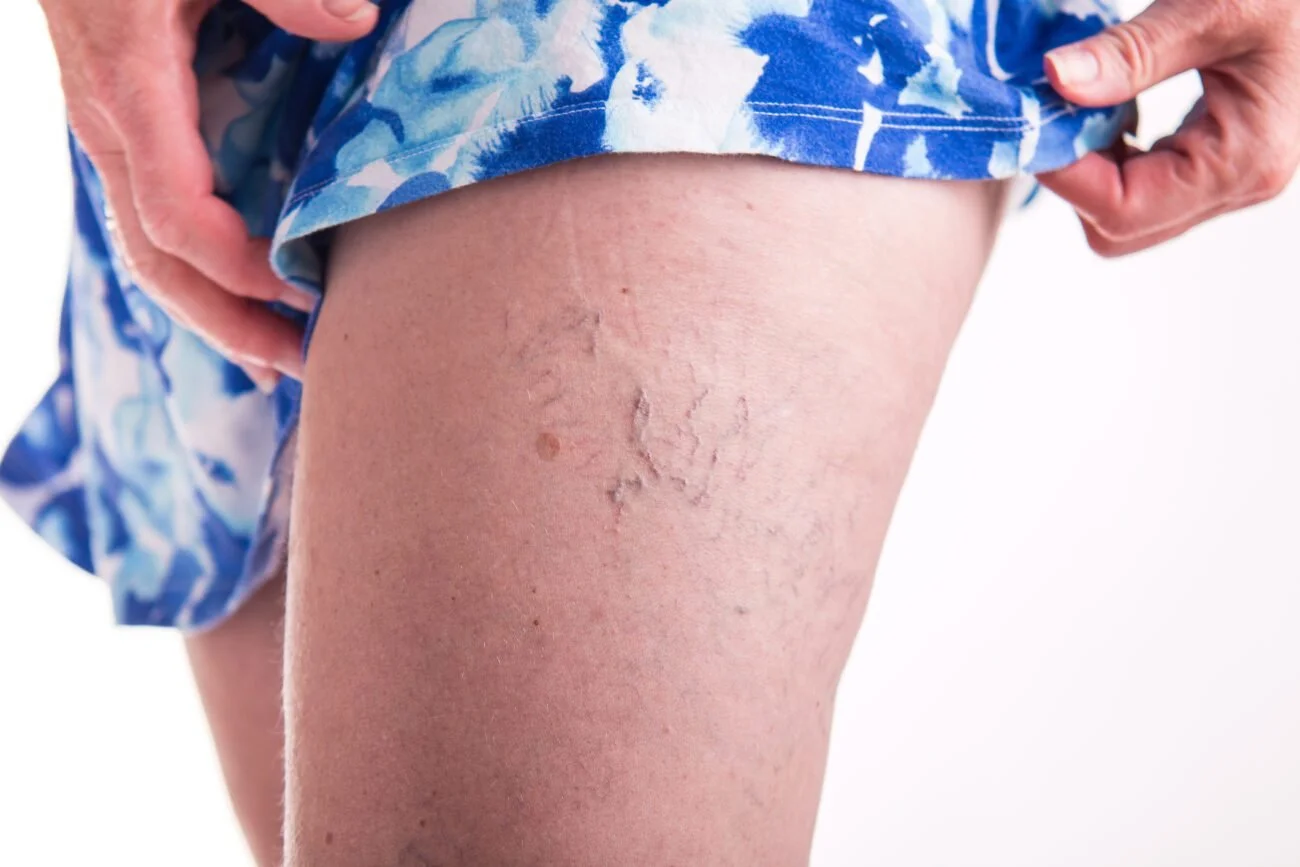
Close-up view of spider veins and small varicose veins clustered on a woman's upper thigh
🦵 Swelling, Aching, and Heaviness Can Develop
As circulation becomes less efficient, some people begin experiencing leg swelling, aching, heaviness, or tiredness in the affected limb. Symptoms may be more noticeable toward the end of the day or after standing for extended periods. Itching around the affected vessels can also occur. These symptoms may be associated with chronic venous insufficiency, a condition in which the veins have difficulty returning blood effectively toward the heart. The presence and severity of symptoms vary from person to person.
🔴 Skin Changes Can Occur Over Time
Untreated varicose veins
Persistent pressure in the lower-leg veins can eventually affect the surrounding skin and tissue. Skin changes may include discoloration, dryness, irritation, inflammation, or thickening. These changes do not happen to everyone, and they are not necessarily a sign that a serious complication is developing. But new or worsening changes around the lower legs should not be dismissed, particularly when they occur alongside swelling or ongoing discomfort. A provider can assess whether the changes may be related to underlying vein disease and determine whether further testing is appropriate.
⚠️ What Are the Complications of Untreated Varicose Veins?
The complications of untreated varicose veins can range from relatively mild symptoms to more advanced problems involving the skin and surrounding tissue. If elevated pressure continues for a prolonged period, some patients may develop inflammation, persistent skin changes, or venous ulcers. An ulcer is an open wound that can develop around the lower leg or ankle when chronic venous disease has significantly affected the skin and underlying tissue. Again, this does not mean every person with enlarged veins will develop an ulcer. Progression depends on the underlying condition, its severity, and individual risk factors.
🔥 Inflammation and Superficial Clotting
Another possible complication is thrombophlebitis, which involves inflammation of a superficial vein, often accompanied by a small clot. The area may become tender, firm, warm, or red. This is different from a deep vein clot, but new or significant leg symptoms should still be evaluated by a medical professional so the cause can be properly determined.
🩸 Can Varicose Veins Bleed?
Prominent veins located close to the surface of the skin can sometimes bleed if they are injured. Bleeding varicose veins may bleed more than expected because pressure within the affected vessel can be elevated. If a visible vein begins bleeding, apply firm direct pressure with clean material and seek medical care if the bleeding does not stop promptly or is substantial. Recurrent bleeding is also a reason to have the underlying vein problem evaluated.
🧬 Does Everyone Progress to Advanced Disease?
No. What happens if varicose veins are left untreated can look very different from one person to another. Some people have visible veins that remain relatively stable and cause little or no discomfort. Others may gradually develop swelling, aching, skin irritation, discoloration, or more advanced complications. The presence of visible veins alone cannot predict exactly how a person's condition will progress. A proper evaluation can help determine whether there is an underlying circulation problem that needs attention.
🔎 When Should You Get Your Veins Evaluated?
Consider seeking professional evaluation if your symptoms are persistent, worsening, or interfering with daily activities. Swelling that keeps returning, ongoing aching or heaviness, significant itching, new skin discoloration, inflammation, or changes around the ankle and lower leg are all reasonable reasons to speak with a provider. You should also seek prompt medical attention for significant bleeding, a suddenly swollen or painful leg, or other new symptoms that seem unusual or severe. A vein specialist can review your symptoms and perform an examination to determine whether an underlying circulation issue may be involved. If needed, a duplex ultrasound can evaluate blood flow and help identify whether reflux is contributing to the problem. This can give you a clearer understanding of whether the visible veins are simply a cosmetic concern or part of a condition that may benefit from treatment.
📍 Don't Ignore Persistent Vein Symptoms
Not every visible vein needs treatment, and not every patient will progress to complications. But persistent symptoms or changes in your legs deserve more than guesswork. An evaluation can determine whether venous reflux or another underlying problem is present and help you understand whether monitoring, conservative care, or treatment may be appropriate. If you are in Rancho Cucamonga and have concerns about changes in your legs, Inland Vein & Wound Specialists can help evaluate your symptoms and determine whether further vein care is appropriate.
Schedule an evaluation to understand what is happening with your veins and what steps, if any, may be right for you.
❓ Frequently Asked Questions
-
They can. Varicose veins associated with underlying venous insufficiency may become more prominent or develop additional symptoms over time.
-
Chronic venous disease can contribute to skin discoloration, inflammation, thickening, and in more advanced cases, venous ulcers.
-
No. Some patients may have veins that cause little or no concern. Treatment decisions depend on symptoms, underlying venous disease, complications, and individual circumstances.
