🩸 Can Varicose Veins Increase Your Risk of Blood Clots?
A painful, firm area along a varicose vein can be more than an ordinary symptom of poor circulation. In some cases, it signals inflammation and clot formation inside a superficial vein. Although not every person with varicose veins will develop a blood clot, the relationship between varicose veins and blood clots deserves attention because some clotting conditions require prompt medical evaluation.
Varicose veins are associated with changes in venous blood flow, particularly when damaged valves allow blood to move backward and pool in the legs. This slower circulation can contribute to superficial vein thrombosis, while other factors may increase the risk of deep vein thrombosis (DVT).
The important distinction is that a clot in a superficial varicose vein is not the same as a clot in a deep vein. Their potential complications, evaluation, and treatment can differ considerably.
Why Does Venous Disease Increase the Risk of Clotting?
The relationship between varicose veins and blood clots can be explained in part by a medical concept called Virchow's triad. It describes three major factors that contribute to thrombosis:
Virchow's Triad
Three contributing factorsVenous Stasis
Blood moves more slowly or pools inside the veins, increasing the opportunity for clot formation.
Vessel Wall Changes
Damage or inflammation affecting the inner lining of a blood vessel can contribute to clot development.
Increased Clotting Tendency
Certain medical conditions, medications, and inherited factors can make blood more likely to clot.
How Are Varicose Veins Connected?
Varicose veins are particularly associated with abnormal blood flow and changes in the superficial vein wall. However, clot formation usually involves more than one contributing factor.
Clinical Example
A person with varicose veins who becomes temporarily immobile after surgery may have additional risk factors. Similarly, a history of DVT or an underlying clotting disorder can substantially change an individual's risk profile.
Why Individual Assessment Matters
This is why a medical evaluation should consider the patient's overall health rather than focusing exclusively on visible veins.
🔬 Can Varicose Veins Cause Blood Clots?
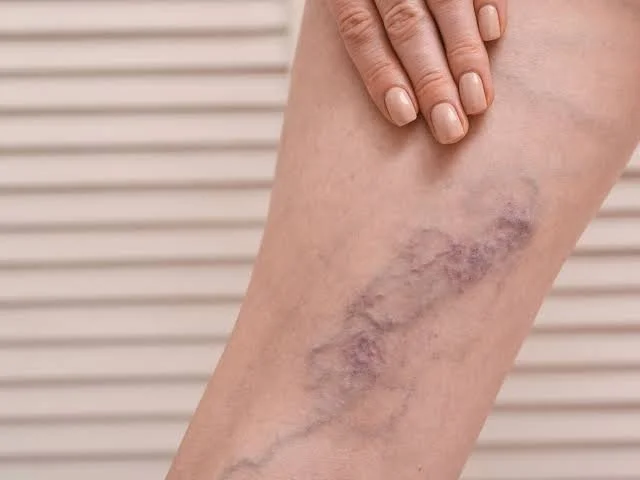
Varicose veins can be associated with an increased risk of blood clots, particularly superficial venous thrombosis. This occurs when a blood clot forms inside a vein close to the surface of the skin, often in an already enlarged or damaged vessel.
To understand why this happens, it helps to consider how normal venous circulation works.
Leg veins contain one-way valves that help move blood upward toward the heart. When these valves become weakened or damaged, they may fail to close properly. Blood can then flow backward, collect in the lower extremities, and increase pressure within the affected veins.
This condition, known as venous reflux, contributes to varicose vein development. It can also create conditions that favor blood stasis, one of the factors involved in clot formation.
However, varicose veins do not automatically mean that a person has a blood clot or will develop one. Clotting risk is influenced by several factors, including age, previous thrombosis, reduced mobility, surgery, pregnancy, hormonal medications, and certain medical conditions.
⚠️ Superficial Thrombophlebitis vs. Deep Vein Thrombosis
Not all blood clots in leg veins carry the same level of risk. Two conditions are especially important to distinguish.
Superficial Venous Thrombosis
Superficial venous thrombosis, sometimes called superficial thrombophlebitis, develops when a clot forms in a vein located near the surface of the skin. It may occur in a varicose vein and cause inflammation around the affected vessel.
Common symptoms include:
A firm, tender cord beneath the skin.
Redness and warmth along the affected vein.
Localized pain or tenderness.
Swelling around the inflamed area.
The affected vein may feel like a hard, sensitive line running along the leg. Although superficial thrombosis is often less dangerous than DVT, it should not automatically be considered harmless.
A clot in a superficial vein may extend toward the deep venous system, particularly when it is located near the junction where superficial and deep veins connect. The location, length, and proximity of the clot influence the risk of complications and the treatment decision.
Deep Vein Thrombosis (DVT)
Deep vein thrombosis occurs when a clot forms in one of the deeper veins, usually in the calf, thigh, or pelvis.
Unlike superficial thrombosis, DVT may cause few noticeable symptoms. When symptoms occur, they can include swelling in one leg, pain or tenderness, warmth, and changes in skin color.
The primary concern is that part of the clot may break away and travel through the bloodstream to the lungs, causing a pulmonary embolism (PE). This is a potentially life-threatening complication. Sudden shortness of breath, chest pain, coughing up blood, rapid heartbeat, or fainting may indicate pulmonary embolism. These symptoms require emergency medical attention.
🩺 How Are Blood Clots in Leg Veins Diagnosed?
Symptoms alone cannot reliably distinguish superficial thrombosis from DVT. Both conditions can cause pain, tenderness, and swelling, and some patients with DVT have very few external signs.
A venous duplex ultrasound is commonly used to evaluate suspected blood clots. This noninvasive examination combines conventional ultrasound imaging with Doppler technology to assess vein structure and blood flow.
The examination can help determine:
Whether a clot is present in a superficial or deep vein.
The location and extent of the affected segment.
Whether blood flow is impaired.
Whether a superficial clot is close to a connection with the deep venous system.
Depending on the clinical situation, a healthcare professional may also use a D-dimer blood test or other diagnostic methods. The need for testing depends on the patient's symptoms and clinical probability of DVT.
A suspected DVT should be evaluated promptly rather than waiting for symptoms to disappear. If a clot is confirmed, treatment decisions depend on its location, extent, associated risks, and the patient's medical history.
💊 How Are Blood Clots Related to Varicose Veins Treated?
Treatment depends on whether the problem is superficial thrombosis, DVT, or chronic venous disease without an active clot.
For selected cases of superficial venous thrombosis, management may include anti-inflammatory medication, compression when appropriate, and continued movement. Some patients require anticoagulant medication, particularly when the clot is extensive or located close to the deep venous system.
DVT generally requires medical assessment and often treatment with anticoagulants. These medications reduce the blood's ability to form additional clots and help prevent an existing clot from growing while the body gradually processes it.
Importantly, varicose vein procedures are not a substitute for treating an active blood clot. Elective treatment of varicose veins is generally considered after the acute condition has been evaluated and appropriately managed.
Once the immediate clotting concern has been addressed, a specialist may assess whether underlying venous reflux needs treatment. Depending on the findings, options such as radiofrequency ablation for venous insufficiency may be considered for appropriate patients. This procedure uses controlled radiofrequency energy delivered through a catheter to close a diseased superficial vein.
INLAND VEIN & WOUND SPECIALISTS
Have a Question?
Concerned about varicose veins, spider veins or a slow-healing wound? Talk to our team about your treatment options and take the next step toward healthier legs.
Inland Vein & Wound Specialists – Rancho Cucamonga, CA
🛡️ Can Treating Varicose Veins Prevent Blood Clots?
Treating varicose veins can address abnormal superficial circulation, but it should not be presented as a guaranteed way to prevent DVT or all future clotting events.
When significant venous reflux is present, treating the affected vein may reduce abnormal blood flow and related symptoms. However, a person's overall risk of thrombosis may also depend on factors unrelated to varicose veins.
Practical measures that support healthy circulation include regular walking, avoiding prolonged immobility, and following medical advice during periods of increased clotting risk, such as after surgery or during extended travel.
Compression stockings may be appropriate for certain patients, but they are not suitable for everyone. Their use should be discussed with a healthcare professional, particularly when arterial circulation problems are possible.
Patients with a history of blood clots should also discuss their individual prevention plan with their treating clinician. Decisions about anticoagulants or other preventive measures require assessment of both clotting and bleeding risks.
PATIENT SUPPORT
WE'RE HERE TO HELP
Have Questions About Your Vein Health?
Whether you're exploring treatment options or ready to schedule a consultation, our team is here to help you take the next step.
📍 When Should You Have Your Veins Evaluated?
A varicose vein that suddenly becomes painful, red, warm, or firm should not be dismissed as an ordinary cosmetic concern. These changes may indicate superficial thrombosis or another condition requiring medical evaluation.
Seek prompt medical assessment if you experience new one-sided leg swelling, unexplained calf or thigh pain, or a tender, hardened vein. If symptoms suggest a pulmonary embolism, seek emergency care immediately.
At Inland Vein & Wound Specialists in Rancho Cucamonga, patients can discuss varicose veins, circulation concerns, and appropriate diagnostic evaluation. Recognizing the difference between ordinary varicose vein symptoms and possible clot-related complications is an important part of protecting long-term vascular health. If you have persistent symptoms or notice a significant change in an affected vein, consider scheduling an evaluation with a qualified vein specialist.

Written by
Whitney Gregory
MEDICAL PROFESSIONAL | CLINICAL TEAM
Whitney is a medical professional on the clinical team at Inland Vein & Wound Specialists. She works with patients every day and shares clear, practical information to help you understand your vein health and feel confident about your care.
Inland Vein & Wound Specialists
Rancho Cucamonga, CA
