
Radiofrequency Ablation (RFA): A Modern, Minimally Invasive Vein Treatment
📡 Radiofrequency Ablation: Modern Vein Treatment in LA
For decades, treating problematic veins often meant surgical procedures, longer recovery periods, and significant disruption to daily life. Today, advances in vascular medicine have transformed the way vein disease is treated. Many patients can now receive effective care through minimally invasive procedures performed in an outpatient setting.
One of the most widely used modern treatments is radiofrequency ablation, a technique designed to close damaged veins without the need for traditional surgery. The procedure targets the source of venous insufficiency, helping improve circulation while reducing symptoms such as leg heaviness, swelling, and discomfort.
🔬 What Is Radiofrequency Ablation (RFA)?
Radiofrequency Ablation, commonly called RFA, is a minimally invasive procedure that uses controlled heat energy to close unhealthy veins. Once the affected vessel is sealed, blood naturally reroutes through healthier veins, improving overall circulation.
⚙️ How RFA Works
The procedure uses a thin catheter inserted into the affected vein under ultrasound guidance. Radiofrequency energy is then delivered through the catheter, heating the vein wall and causing it to collapse and seal shut.
Over time, the treated vessel is absorbed by the body while circulation continues through healthy pathways. This procedure is commonly used to treat chronic venous insufficiency and enlarged veins caused by faulty vein valves. Patients experiencing leg swelling, aching, heaviness, fatigue, or visible bulging veins may be candidates for treatment.
Many cases of RFA vein treatment focus on addressing the underlying circulation problem rather than simply improving appearance. Traditional vein surgery often required larger incisions, general anesthesia, and longer recovery periods. Modern ablation techniques offer a less invasive alternative with significantly reduced downtime.
Patients typically experience fewer disruptions to their daily activities and can often return to normal routines much sooner.
🗺️ The RFA Treatment Process
Knowing the treatment process helps patients feel more comfortable and informed before undergoing the procedure. Before treatment begins, ultrasound imaging is used to evaluate blood flow and identify damaged veins. This process, often called vein mapping, allows physicians to create a precise treatment plan based on the patient's unique anatomy.
Accurate diagnosis is essential for achieving effective long-term results. The treatment is typically performed using local anesthesia. After the catheter is positioned inside the targeted vessel, radiofrequency energy is delivered along the length of the vein. The procedure is generally completed in less than an hour, depending on the number and size of the veins being treated.Recovery is usually straightforward. Patients are commonly encouraged to walk shortly after treatment and resume many normal activities within a short period.
Compression stockings may be recommended temporarily to support circulation during the healing process.
🌟 Benefits of Minimally Invasive Vein Treatment
Modern vein procedures continue to gain popularity because they effectively treat circulation problems while minimizing recovery challenges.
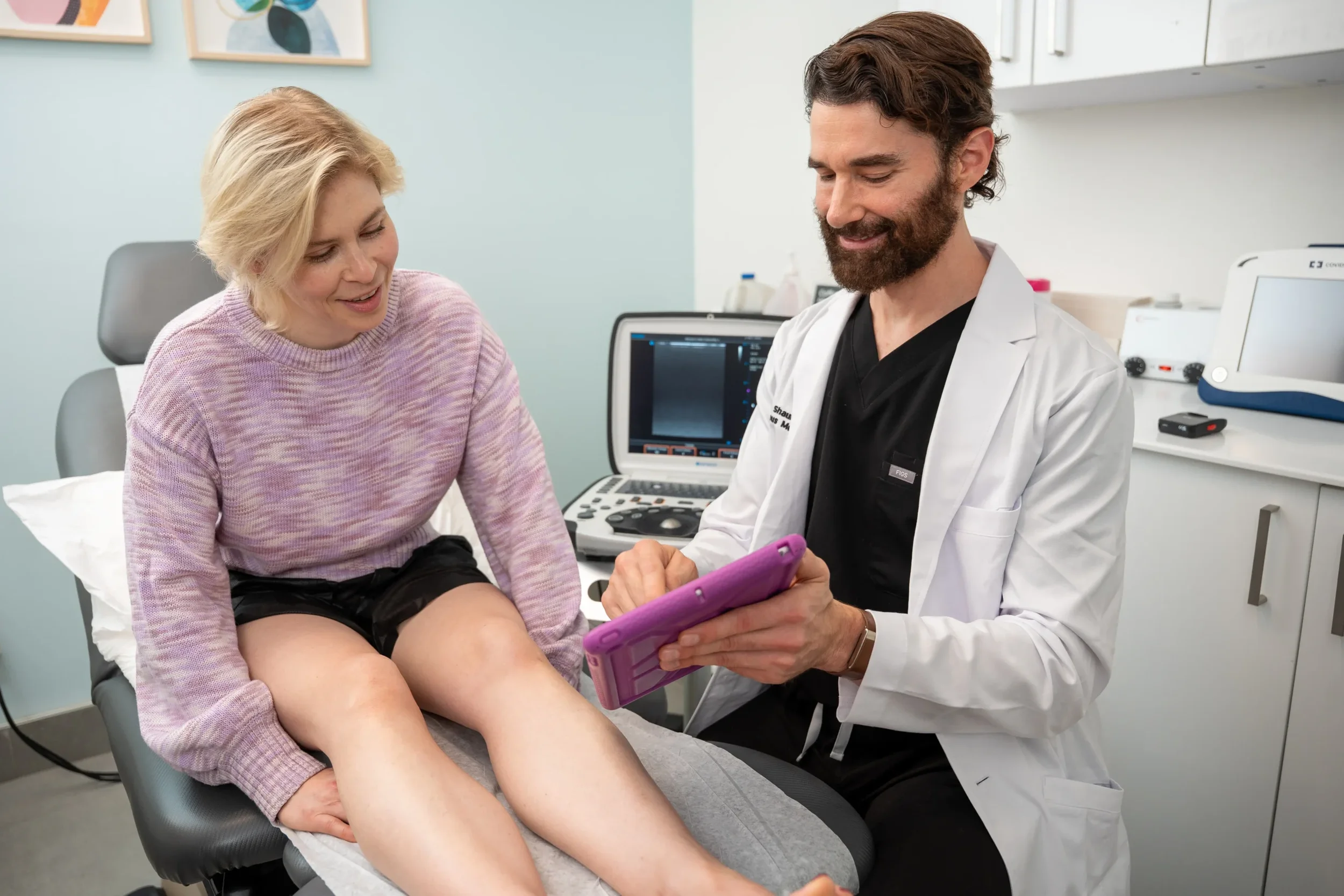
Patient consulting with a vein specialist about Radiofrequency Ablation (RFA) treatment options.
🚶 Faster Recovery
Compared to traditional surgery, recovery is often significantly quicker. Most patients can return to regular daily activities without extended downtime.
This is one reason minimally invasive vein treatment options have become increasingly common in vascular care.
😊 Minimal Discomfort
Because the procedure requires only a small entry point and local anesthesia, patients typically experience less discomfort than with older surgical approaches.
Many individuals report only mild soreness during the recovery period.
📈 Long-Term Effectiveness
Studies have shown strong long-term success rates for varicose vein ablation procedures when patients are properly evaluated and treated.
By addressing the underlying source of venous insufficiency, the procedure helps improve circulation and reduce symptom recurrence.
🏥 Why Inland Vein & Wound Specialists Uses RFA
Inland Vein & Wound Specialists utilizes advanced diagnostic imaging and modern treatment technologies to address chronic venous conditions. Radiofrequency Ablation is part of the clinic's comprehensive approach to treating circulation disorders with minimally invasive techniques that prioritize patient comfort, safety, and long-term results.
The procedure allows many patients to receive effective treatment without the recovery demands often associated with traditional surgery.
❤️ A Modern Approach to Vein Care
Advances in vascular medicine have made it possible to treat vein disease with greater precision and less disruption to daily life. Rather than relying on invasive surgical methods, procedures like Radiofrequency Ablation focus on restoring healthy circulation through targeted treatment. For patients experiencing symptoms related to venous insufficiency, learning about available treatment options is an important step toward improving both comfort and vascular health.
❓ Frequently Asked Questions
-
Most patients experience minimal discomfort during the procedure because local anesthesia is used to numb the treatment area. Mild soreness or tightness may occur afterward, but it typically resolves quickly.
-
The treatment is often completed in less than an hour, although the exact time depends on the complexity of the case and the number of veins being treated.
-
Radiofrequency Ablation has demonstrated high success rates in treating venous insufficiency. Long-term outcomes are generally very favorable when the underlying condition is properly diagnosed and treated.
-
The treated vein typically remains closed permanently. However, vein disease is a progressive condition, and new problematic veins can develop over time, making ongoing vascular health monitoring important.
