🩺 What Is Ambulatory Phlebectomy and When Is It Needed?
Some varicose veins remain prominent even when the underlying circulation problem has been treated. Others are too large, raised, or twisted to respond well to injections alone. In these situations, a vein specialist may consider ambulatory phlebectomy, a minimally invasive procedure that physically removes selected superficial varicose veins through very small skin incisions.
Unlike treatments that close a vein from the inside, ambulatory phlebectomy removes the affected vein segments. It is generally performed as an outpatient procedure, often using local anesthesia, and is intended for visible varicose veins located close to the skin's surface.
The procedure is not necessary for everyone with varicose veins. Its suitability depends on the size and location of the affected vessels, the presence of underlying venous reflux, symptoms, and the patient's overall vascular condition.
🔬 How Does the Ambulatory Phlebectomy Procedure Work?
Ambulatory phlebectomy, also called microphlebectomy or stab phlebectomy, involves removing enlarged superficial veins through tiny openings in the skin.
Before treatment, the provider identifies the veins to be removed. The targeted vessels may be marked while the patient is standing, when varicose veins are often easier to see and map. Ultrasound may also be used when the anatomy or underlying circulation needs further assessment.
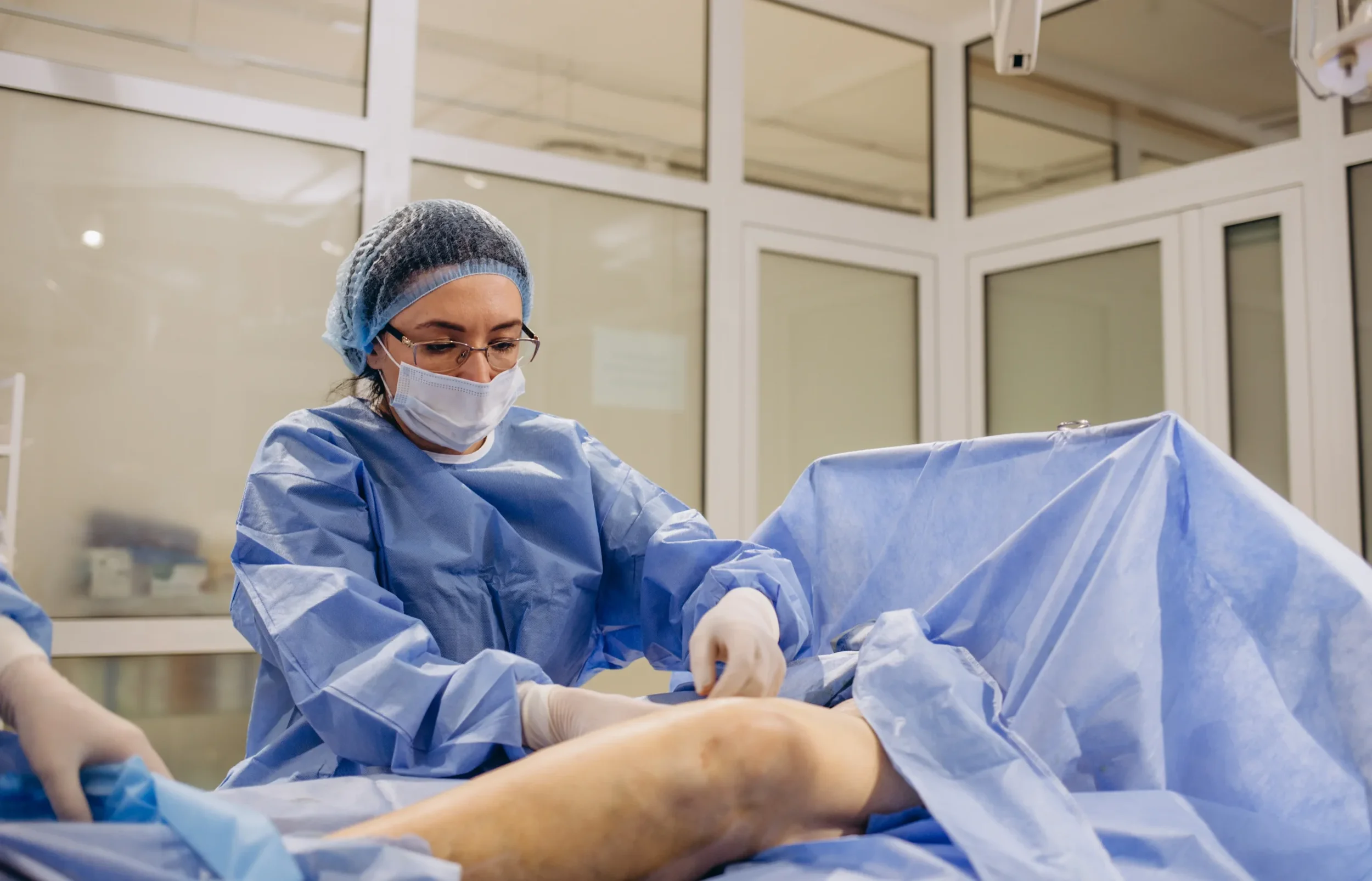
The treatment area is cleaned, and local anesthetic is administered to numb the skin and surrounding tissue. The provider then makes small punctures or incisions near the targeted vein. Using a specialized surgical instrument, the vein is gently brought through the opening and removed in sections.
Because varicose veins can follow a winding course beneath the skin, they are often removed in several short segments rather than pulled out as one continuous vessel. The small openings are typically closed with adhesive strips or allowed to heal without conventional sutures, depending on the technique and provider's preference.
The procedure does not require removal of the major deep veins responsible for returning blood to the heart. It targets superficial veins that are no longer functioning normally. Blood continues to circulate through the remaining healthy venous network.
⚖️ Ambulatory Phlebectomy vs. Radiofrequency Ablation
Although both procedures are used in the treatment of varicose veins, they address different parts of the venous system.
When Is Ambulatory Phlebectomy Recommended?
Ambulatory phlebectomy is most often considered for larger, bulging varicose veins that lie close to the skin's surface. These vessels may cause discomfort, interfere with daily activities, or remain visible despite treatment of underlying venous reflux.
A specialist may discuss this approach when a patient has:
- ✓ Prominent, twisted varicose veins that can be felt beneath the skin.
- ✓ Localized aching, tenderness, or discomfort around enlarged surface veins.
- ✓ Superficial veins that remain after treatment of an underlying refluxing vein.
- ✓ Varicosities that are not suitable for injection-based treatment alone.
- ✓ Recurrent superficial varicose veins that require further assessment and treatment.
Appearance Is Not the Only Factor
The decision is not based on appearance alone. A large vein may be primarily a cosmetic concern, while a smaller visible vessel may be associated with significant venous disease. Symptoms, physical examination, and diagnostic findings help determine whether removal is appropriate.
Why Is Duplex Ultrasound Important?
A duplex ultrasound may be recommended to assess the superficial and deep venous systems, identify reflux, and determine whether a larger vein is contributing to the visible varicosities.
Ambulatory phlebectomy removes enlarged superficial veins through small skin openings. Radiofrequency ablation (RFA), in contrast, treats an incompetent vein from the inside. A catheter delivers controlled radiofrequency energy to the targeted vessel, causing it to close.
RFA is commonly used when a major superficial vein, such as the great or small saphenous vein, has significant reflux. Phlebectomy may be considered for the larger surface varicosities connected to that vein.
In some treatment plans, both approaches are used because closing the source of reflux and removing prominent tributary veins address different aspects of the condition. In other cases, one procedure may be sufficient.
Patients can explore how radiofrequency ablation treats venous insufficiency to better understand the difference between closing a diseased vein and physically removing superficial varicosities.
💉 How Does Phlebectomy Differ From Sclerotherapy?
Sclerotherapy and phlebectomy are also distinct procedures, even though both can improve the appearance of visible veins.
Sclerotherapy involves injecting a solution into a targeted vessel. The solution irritates the inner lining of the vein, encouraging its walls to close. Over time, the treated vessel is gradually absorbed by the body.
It is commonly used for spider veins, smaller reticular veins, and selected varicose veins. However, very large or significantly twisted surface veins may not be ideal candidates for conventional injection treatment.
Ambulatory phlebectomy physically removes selected vein segments instead of relying on an injected solution to close them.
The choice depends on vessel size, depth, anatomy, and the underlying circulation. For example, a patient with small surface veins may be considered for cosmetic sclerotherapy, while someone with prominent bulging varicosities may require a different approach.
Neither procedure automatically replaces treatment of significant underlying venous reflux. If the source of abnormal pressure remains untreated, additional varicose veins may develop over time.
⏳ What Is Phlebectomy Recovery Like?
Recovery after ambulatory phlebectomy is generally manageable because the procedure uses small skin openings rather than a large surgical incision. However, the healing process varies depending on how many veins are removed, the extent of treatment, and individual health factors.
Bruising, mild swelling, tenderness, and temporary discoloration around the treated areas are common during the initial recovery period. Small incision sites may also feel sensitive while the surrounding tissue heals.
Patients are often encouraged to walk shortly after the procedure. Gentle movement supports circulation and helps reduce prolonged inactivity. At the same time, strenuous exercise, heavy lifting, and activities that place excessive strain on the treated leg may need to be restricted temporarily.
Post-procedure instructions may include:
Compression: Wearing prescribed compression garments for the recommended period.
Walking: Taking regular, comfortable walks rather than remaining seated or lying down for extended periods.
Incision care: Keeping the treated areas clean and following instructions for dressings or adhesive strips.
Activity restrictions: Gradually returning to exercise and other demanding activities according to the provider's guidance.
Follow-up: Attending recommended visits to assess healing and address any remaining symptoms.
Patients should contact their treating provider if they develop increasing redness, warmth, drainage, worsening pain, or other signs of possible complications. Sudden shortness of breath, chest pain, or fainting requires emergency medical attention.
INLAND VEIN & WOUND SPECIALISTS
Have a Question?
Concerned about varicose veins, spider veins or a slow-healing wound? Talk to our team about your treatment options and take the next step toward healthier legs.
Inland Vein & Wound Specialists – Rancho Cucamonga, CA
⚠️ Are There Risks Associated With Microphlebectomy?
Ambulatory phlebectomy is minimally invasive, but it is still a medical procedure and carries potential risks.
Possible complications include bruising, bleeding, infection, temporary numbness, skin discoloration, and localized tenderness. Small sensory nerves run near some superficial veins, so irritation or injury to these nerves can occasionally cause altered sensation around the treated area.
Blood clots are also a potential concern, although the level of risk varies with individual health factors and the extent of treatment. Patients with a history of thrombosis, circulation problems, or other relevant medical conditions should discuss these factors with their provider before undergoing a procedure.
Not every patient is an appropriate candidate. The provider must consider the patient's medical history, medications, skin condition, circulation, and the anatomy of the affected veins. When significant arterial disease or other medical concerns are present, additional evaluation may be needed before treatment.
🩻 Can Varicose Veins Return After Phlebectomy?
Ambulatory phlebectomy removes the treated vein segments, but it does not eliminate a person's underlying tendency to develop venous disease.
New varicose veins may appear in other areas if venous reflux persists or develops in different vessels. In some patients, untreated reflux in a larger superficial vein can continue to place pressure on connected tributaries.
This is why identifying the source of varicose veins is just as important as deciding how to remove the visible vessels. A treatment plan based on a complete venous evaluation may combine procedures that address both the underlying circulation problem and the surface varicosities.
Patients who notice recurring bulging veins, leg heaviness, swelling, or persistent discomfort should consider a professional evaluation rather than assuming that the original treatment simply needs to be repeated.
PATIENT SUPPORT
WE'RE HERE TO HELP
Have Questions About Your Vein Health?
Whether you're exploring treatment options or ready to schedule a consultation, our team is here to help you take the next step.
🌿 Choosing the Right Treatment for Visible Varicose Veins
Ambulatory phlebectomy can be an effective option for selected patients with prominent superficial varicose veins, particularly when those vessels are too large or anatomically unsuitable for injection-based treatment alone. Its purpose is different from procedures such as radiofrequency ablation, which close an incompetent vein responsible for abnormal blood flow.
The most appropriate approach depends on more than the appearance of the legs. A specialist should evaluate the affected veins, assess circulation when indicated, and determine whether the treatment should address visible tributaries, underlying reflux, or both.
At Inland Vein & Wound Specialists in Rancho Cucamonga, patients can discuss their varicose vein symptoms and available treatment options as part of an individual evaluation. If bulging veins, leg discomfort, or swelling are affecting your daily activities, consider scheduling a consultation to determine which approach may be appropriate for your condition.
Written by
Whitney Gregory
MEDICAL PROFESSIONAL | CLINICAL TEAM
Whitney is a medical professional on the clinical team at Inland Vein & Wound Specialists. She works with patients every day and shares clear, practical information to help you understand your vein health and feel confident about your care.
Inland Vein & Wound Specialists
Rancho Cucamonga, CA
